

Author: cfliao
SHANGHAI, China (UCAN) – Shanghai diocese capped its nine-month celebration of the 400th anniversary of Catholicism’s arrival with the ordination of two priests.
Auxiliary Bishop Joseph Xing Wenzhi of Shanghai ordained Fathers Joseph Li Gangyao and Joseph Xu Ruhao on Dec. 6 at St. Ignatius Cathedral in the downtown Xujiahui district of the city, 1,080 kilometers southeast of Beijing. Both graduated from Sheshan Regional Seminary on the outskirts of Shanghai.
About 2,000 Catholics, including relatives of the new priests, attended the ordination Mass, which 87 priests from local and neighboring dioceses concelebrated.
With the ordination of Father Li, Shanghai diocese now has 75 diocesan priests. Father Xu was ordained for Anhui diocese, to the west.
Bishop Xing told the congregation that although the anniversary celebrations have come to a close, “our mission does not end today, but rather it marks a new impetus for us to spread the Gospel to those who have never heard of it.”
Noting that the universal Church is now in the midst of celebrating a Pauline Year, Bishop Xing urged the congregation to model themselves after Saint Paul the Apostle in evangelizing zeal.
Pope Benedict XVI declared June 28, 2008, to June 29, 2009, as the Year of Saint Paul.
During the ordination rite, Bishop Xing encouraged the new priests to learn to be good shepherds like Jesus Christ, who “comes not to be served but to serve, and to search for the lost.”
Father Li told UCA News two days later that he knows many Catholics have been praying for him and will “work hard to evangelize as a gesture of thanks.” He added that he would look toward the early missioners to China as role models.
Bishop Aloysius Jin Luxian of Shanghai had asked Catholics to intensify evangelization efforts to mark this year’s landmark anniversary. In a pastoral letter he issued in December 2007 to announce the celebration, he also urged them to renew themselves spiritually, especially in response to the pope’s call for prayers to Our Lady of Sheshan on May 24, the feast day of the Sheshan Marian shrine.
The elderly bishop is currently in poor health.
The Catholic Church began in Shanghai in 1608, when Paul Xu Guangqi, the first Shanghai Catholic, invited Italian Jesuit Father Lazare Cattaneo to preach here. About 200 people received baptism during the priest’s two-year stay, and the first Catholic church was built near Xujiahui.
The diocesan celebrations of the anniversary, which began on March 1, included pilgrimages to the Sheshan shrine in May and a seminar on evangelization in September.
On Oct. 30, an exhibition of about 100 photos linked to local Church history opened at the cathedral. Tours to 30 parishes that will go until May 30, 2009, were also launched.
Another anniversary event, the first-ever diocesan choral concert, was staged at the cathedral on Nov. 15, the diocesan website reported. About 1,000 laypeople, priests, seminarians and nuns, as well as local and foreign tourists, attended the performance.
Father Antonius Li Xiaowei, the organizer of the concert, told UCA News each of the diocese six deaneries, or parish groupings, sent a choir to participate. The hymns were grouped under three themes: Remembering the Past, Expressing Thanks for the Present and Looking to the Future.
As examples of songs in the first category, he cited the Latin hymn Sicut Cervus (as the deer), performed by a youth choir, and the Chinese Shepherd Song, sung by some priests. These hymns depicted how the early missioners “brought the Good News to China, but were at times barred from entering the country,” he explained. “We Chinese became thirsty for God, just like the deer that searches for the spring.”
Today, he said, the Chinese people are still thirsty for God, a sentiment that was expressed in Chinese hymns such as Thirst for God and God Reads My Heart.
Before the anniversary celebrations began in March, the diocese had already launched a one-year evangelization formation program for 80 lay Catholics. On Jan. 19, each participant received a certificate after completing courses on the Bible, Church dogma and history, liturgy and evangelization skills.
SHANGHAI, China (UCAN) – Shanghai diocese capped its nine-month celebration of the 400th anniversary of Catholicism’s arrival with the ordination of two priests.
Auxiliary Bishop Joseph Xing Wenzhi of Shanghai ordained Fathers Joseph Li Gangyao and Joseph Xu Ruhao on Dec. 6 at St. Ignatius Cathedral in the downtown Xujiahui district of the city, 1,080 kilometers southeast of Beijing. Both graduated from Sheshan Regional Seminary on the outskirts of Shanghai.
About 2,000 Catholics, including relatives of the new priests, attended the ordination Mass, which 87 priests from local and neighboring dioceses concelebrated.
With the ordination of Father Li, Shanghai diocese now has 75 diocesan priests. Father Xu was ordained for Anhui diocese, to the west.
Bishop Xing told the congregation that although the anniversary celebrations have come to a close, “our mission does not end today, but rather it marks a new impetus for us to spread the Gospel to those who have never heard of it.”
Noting that the universal Church is now in the midst of celebrating a Pauline Year, Bishop Xing urged the congregation to model themselves after Saint Paul the Apostle in evangelizing zeal.
Pope Benedict XVI declared June 28, 2008, to June 29, 2009, as the Year of Saint Paul.
During the ordination rite, Bishop Xing encouraged the new priests to learn to be good shepherds like Jesus Christ, who “comes not to be served but to serve, and to search for the lost.”
Father Li told UCA News two days later that he knows many Catholics have been praying for him and will “work hard to evangelize as a gesture of thanks.” He added that he would look toward the early missioners to China as role models.
Bishop Aloysius Jin Luxian of Shanghai had asked Catholics to intensify evangelization efforts to mark this year’s landmark anniversary. In a pastoral letter he issued in December 2007 to announce the celebration, he also urged them to renew themselves spiritually, especially in response to the pope’s call for prayers to Our Lady of Sheshan on May 24, the feast day of the Sheshan Marian shrine.
The elderly bishop is currently in poor health.
The Catholic Church began in Shanghai in 1608, when Paul Xu Guangqi, the first Shanghai Catholic, invited Italian Jesuit Father Lazare Cattaneo to preach here. About 200 people received baptism during the priest’s two-year stay, and the first Catholic church was built near Xujiahui.
The diocesan celebrations of the anniversary, which began on March 1, included pilgrimages to the Sheshan shrine in May and a seminar on evangelization in September.
On Oct. 30, an exhibition of about 100 photos linked to local Church history opened at the cathedral. Tours to 30 parishes that will go until May 30, 2009, were also launched.
Another anniversary event, the first-ever diocesan choral concert, was staged at the cathedral on Nov. 15, the diocesan website reported. About 1,000 laypeople, priests, seminarians and nuns, as well as local and foreign tourists, attended the performance.
Father Antonius Li Xiaowei, the organizer of the concert, told UCA News each of the diocese six deaneries, or parish groupings, sent a choir to participate. The hymns were grouped under three themes: Remembering the Past, Expressing Thanks for the Present and Looking to the Future.
As examples of songs in the first category, he cited the Latin hymn Sicut Cervus (as the deer), performed by a youth choir, and the Chinese Shepherd Song, sung by some priests. These hymns depicted how the early missioners “brought the Good News to China, but were at times barred from entering the country,” he explained. “We Chinese became thirsty for God, just like the deer that searches for the spring.”
Today, he said, the Chinese people are still thirsty for God, a sentiment that was expressed in Chinese hymns such as Thirst for God and God Reads My Heart.
Before the anniversary celebrations began in March, the diocese had already launched a one-year evangelization formation program for 80 lay Catholics. On Jan. 19, each participant received a certificate after completing courses on the Bible, Church dogma and history, liturgy and evangelization skills.
Since anti-Christian violence broke out in the Indian state of Orissa on 23 August, Jesuits have been involved in many kinds of activities to mend the broken communities. Soon after the first outbreak of the violence, Mike T. Raj SJ (the Provincial of Jamshedpur), Prakash Louis SJ and Xavier Jeyaraj SJ went for a week to the area to coordinate the initial response together with civil society groups, international NGOs, faith-based groups and the Jesuits of Orissa.
In the course of the weeks that followed, Jesuits and their colleagues in social centres all over the South Asian Assistancy mobilised people for rallies and other direct action to protest the violence in Orissa, while the website www.jesaonline.org and frequent emails were used to report news from the ground. In mid-October, the triennial Convention of Jesuits in Social Action took place (see Headlines 10-2008) and the participants adopted a number of recommendations, which were subsequently supported by the Jesuit Conference of South Asia. Click here to read their statement: http://jesaonline.org/forum22.html
S. Tony Raj SJ and his team of Jesuits in Orissa are coordinating the work in Bhubaneswar and in the relief camps in Kandhamal. A coordination centre run by S. Tony Raj has been set up, which will house the documentation, media and legal work of the archdiocese. Jesuit lawyers have volunteered to help the victims file the all-important First Information Reports (FIR). Apart from financial help, the Jesuits intend to take up 30 villages (750 families) in Kandhamal district where they are working already, and to continue their peace building and rehabilitation work in the region.
Since anti-Christian violence broke out in the Indian state of Orissa on 23 August, Jesuits have been involved in many kinds of activities to mend the broken communities. Soon after the first outbreak of the violence, Mike T. Raj SJ (the Provincial of Jamshedpur), Prakash Louis SJ and Xavier Jeyaraj SJ went for a week to the area to coordinate the initial response together with civil society groups, international NGOs, faith-based groups and the Jesuits of Orissa.
In the course of the weeks that followed, Jesuits and their colleagues in social centres all over the South Asian Assistancy mobilised people for rallies and other direct action to protest the violence in Orissa, while the website www.jesaonline.org and frequent emails were used to report news from the ground. In mid-October, the triennial Convention of Jesuits in Social Action took place (see Headlines 10-2008) and the participants adopted a number of recommendations, which were subsequently supported by the Jesuit Conference of South Asia. Click here to read their statement: http://jesaonline.org/forum22.html
S. Tony Raj SJ and his team of Jesuits in Orissa are coordinating the work in Bhubaneswar and in the relief camps in Kandhamal. A coordination centre run by S. Tony Raj has been set up, which will house the documentation, media and legal work of the archdiocese. Jesuit lawyers have volunteered to help the victims file the all-important First Information Reports (FIR). Apart from financial help, the Jesuits intend to take up 30 villages (750 families) in Kandhamal district where they are working already, and to continue their peace building and rehabilitation work in the region.
 The Jesuit Conference of the Society of Jesus in the United States and Justice for Immigrants have partnered to invite people to put their stories, reflections and ideas about migration on video by participating in a contest about immigration that runs through Jan. 12, 2009.
“While the United States government has failed to fix our broken immigration system, we want to hear from people whose families and communities are grappling with the issue right now,” said Jill Marie Gerschutz, migration policy director for the Jesuit Conference. “What is the reality for migrants in the U.S. today? This video contest is an opportunity for people to pick up a camera and add their voices to the immigration debate.”
Two winning videos will be selected that tell non-partisan stories about the migration realities of their families and communities. All videos will be required to include aspects of Catholic Social Teaching on migration and should be between three to seven minutes in length. Criteria such as creativity, quality of the video and appropriateness for the Church audience will be considered in judging.
First prize winners will receive a free flight, registration and lodging to the Ignatian Family Teach-In on Immigration from March 13-16, 2009 in Washington, D.C. Winners will present their videos at the conference and will have an opportunity to meet one-on-one with a social media video producer. The winning film will also be considered for use in the Justice for Immigrants campaign – the Catholic Campaign for Immigration Reform.
Entries should be posted on YouTube.com with the link to the submission, name, school or parish affiliation, email address, phone number and home address to [email protected] no later than Jan. 12, 2009. Individuals from across the U.S. will be allowed to weigh in by voting electronically via the Justice for Immigrants website, www.justiceforimmigrants.org, during the week of Jan. 15 – 23, 2009.
The Jesuit Conference of the Society of Jesus in the United States and Justice for Immigrants have partnered to invite people to put their stories, reflections and ideas about migration on video by participating in a contest about immigration that runs through Jan. 12, 2009.
“While the United States government has failed to fix our broken immigration system, we want to hear from people whose families and communities are grappling with the issue right now,” said Jill Marie Gerschutz, migration policy director for the Jesuit Conference. “What is the reality for migrants in the U.S. today? This video contest is an opportunity for people to pick up a camera and add their voices to the immigration debate.”
Two winning videos will be selected that tell non-partisan stories about the migration realities of their families and communities. All videos will be required to include aspects of Catholic Social Teaching on migration and should be between three to seven minutes in length. Criteria such as creativity, quality of the video and appropriateness for the Church audience will be considered in judging.
First prize winners will receive a free flight, registration and lodging to the Ignatian Family Teach-In on Immigration from March 13-16, 2009 in Washington, D.C. Winners will present their videos at the conference and will have an opportunity to meet one-on-one with a social media video producer. The winning film will also be considered for use in the Justice for Immigrants campaign – the Catholic Campaign for Immigration Reform.
Entries should be posted on YouTube.com with the link to the submission, name, school or parish affiliation, email address, phone number and home address to [email protected] no later than Jan. 12, 2009. Individuals from across the U.S. will be allowed to weigh in by voting electronically via the Justice for Immigrants website, www.justiceforimmigrants.org, during the week of Jan. 15 – 23, 2009.
HONG KONG (UCAN) – The launch of a new book on the mission of Jesuits in Hong Kong, particularly in education, has prompted a Jesuit educator to point out challenges and opportunities lying ahead for education in the territory.
Father Alfred Deignan, superior of Hong Kong’s Matteo Ricci community of the Chinese Province of the Society of Jesus (Jesuits), says the many changes in store for education in Hong Kong will challenge teachers.
He offered these comments to UCA News on Nov. 18 at the launch of “Jesuits in Hong Kong, South China and Beyond: Irish Jesuit Mission — Its Development 1926-2006.” Jesuit Father Thomas J. Morrissey, an Irish historian who has a doctorate in the history of Jesuit education, wrote the book. About 100 guests — Jesuits, alumni of local Jesuit-run colleges, as well as teachers, friends and journalists — attended the launch at Wah Yan College on Hong Kong Island.
Among the changes to which Father Deignan referred are: shortening high-school education from seven years to six from 2009, extending university education from three years to four from 2012, and limiting the number of students in a school classroom to 25 starting with the 2008-2009 school year.
Moreover, the Catholic diocese of Hong Kong is negotiating with the government about an education ordinance requiring all government-aided schools by 2010 to set up an Incorporated Management Committee that must include representatives of teachers, parents and alumni. The local Church is worried that the ordinance will not allow Catholic school-sponsoring bodies to realize their vision for education.
Nobody likes too many changes, Father Deignan admitted. Even so, the Irish missioner said, he thinks local teachers are ready for the changes. He also noted that local education has seen many improvements, such as plans to develop the Hong Kong Institute of Education into a university.
“A good opportunity to set up a Catholic university” exists in Hong Kong, he added, since the Church is building an institute that will offer diploma and degree courses by 2010. The facility is in Tseung Kwan O, a new town built on reclaimed land at the eastern mouth of Hong Kong’s Victoria Harbor.
He also pointed out that his own community would try to help if asked, and Jesuit Father Stephen Chow agrees with his superior’s view. The Chinese priest told UCA News on Nov. 18 that the Jesuits would be glad to offer help if needed, but the diocese should lead the effort to found a Catholic university.
Father Deignan explained that he wanted to record the Jesuits’ education ministry for some years, so he invited Father Morrissey to write the book.
The author told guests at the launch that his 840-page book, with more than 200 photos, presents real stories and gives an overall picture of the community’s ministry. It is an historical account of the Irish Jesuits’ mission in Hong Kong as well as mainland China, Macau, Malaysia and Singapore, particularly in the fields of education, social work and media.
According to the book, Irish Jesuits were invited here in 1926 by Bishop Enrico Valtorta, then apostolic vicar of Hong Kong, who was looking for “educationalists” to “establish a high-class secondary school for boys.”
In 1990, as many people chose to leave Hong Kong before the 1997 handover of the territory from British to Chinese rule, the Jesuit province openly affirmed it would stay on, to show “solidarity with the poor since only the poor have no choice but to remain.”
Meanwhile, the government-run Hong Kong Institute of Education gave Father Deignan an honorary doctorate on Nov. 13. The honor applauds him for putting Jesuit pedagogical principles into practice and for making Hong Kong’s two Jesuit-run Wah Yan colleges the territory’s most respected high schools.
It also recognizes him for revitalizing moral education, resulting in the government releasing its Guidelines on Moral Education in 1981, and for promoting the development of the whole person in schools in the 1990s.
Besides the Wah Yan colleges, Jesuits in Hong Kong run two Catholic university hostels and a retreat house, and also teach at the Holy Spirit Seminary College. They are credited with founding the Credit Union Movement, Catholic Marriage Advisory Council and the Industrial Relations Institute.
HONG KONG (UCAN) – The launch of a new book on the mission of Jesuits in Hong Kong, particularly in education, has prompted a Jesuit educator to point out challenges and opportunities lying ahead for education in the territory.
Father Alfred Deignan, superior of Hong Kong’s Matteo Ricci community of the Chinese Province of the Society of Jesus (Jesuits), says the many changes in store for education in Hong Kong will challenge teachers.
He offered these comments to UCA News on Nov. 18 at the launch of “Jesuits in Hong Kong, South China and Beyond: Irish Jesuit Mission — Its Development 1926-2006.” Jesuit Father Thomas J. Morrissey, an Irish historian who has a doctorate in the history of Jesuit education, wrote the book. About 100 guests — Jesuits, alumni of local Jesuit-run colleges, as well as teachers, friends and journalists — attended the launch at Wah Yan College on Hong Kong Island.
Among the changes to which Father Deignan referred are: shortening high-school education from seven years to six from 2009, extending university education from three years to four from 2012, and limiting the number of students in a school classroom to 25 starting with the 2008-2009 school year.
Moreover, the Catholic diocese of Hong Kong is negotiating with the government about an education ordinance requiring all government-aided schools by 2010 to set up an Incorporated Management Committee that must include representatives of teachers, parents and alumni. The local Church is worried that the ordinance will not allow Catholic school-sponsoring bodies to realize their vision for education.
Nobody likes too many changes, Father Deignan admitted. Even so, the Irish missioner said, he thinks local teachers are ready for the changes. He also noted that local education has seen many improvements, such as plans to develop the Hong Kong Institute of Education into a university.
“A good opportunity to set up a Catholic university” exists in Hong Kong, he added, since the Church is building an institute that will offer diploma and degree courses by 2010. The facility is in Tseung Kwan O, a new town built on reclaimed land at the eastern mouth of Hong Kong’s Victoria Harbor.
He also pointed out that his own community would try to help if asked, and Jesuit Father Stephen Chow agrees with his superior’s view. The Chinese priest told UCA News on Nov. 18 that the Jesuits would be glad to offer help if needed, but the diocese should lead the effort to found a Catholic university.
Father Deignan explained that he wanted to record the Jesuits’ education ministry for some years, so he invited Father Morrissey to write the book.
The author told guests at the launch that his 840-page book, with more than 200 photos, presents real stories and gives an overall picture of the community’s ministry. It is an historical account of the Irish Jesuits’ mission in Hong Kong as well as mainland China, Macau, Malaysia and Singapore, particularly in the fields of education, social work and media.
According to the book, Irish Jesuits were invited here in 1926 by Bishop Enrico Valtorta, then apostolic vicar of Hong Kong, who was looking for “educationalists” to “establish a high-class secondary school for boys.”
In 1990, as many people chose to leave Hong Kong before the 1997 handover of the territory from British to Chinese rule, the Jesuit province openly affirmed it would stay on, to show “solidarity with the poor since only the poor have no choice but to remain.”
Meanwhile, the government-run Hong Kong Institute of Education gave Father Deignan an honorary doctorate on Nov. 13. The honor applauds him for putting Jesuit pedagogical principles into practice and for making Hong Kong’s two Jesuit-run Wah Yan colleges the territory’s most respected high schools.
It also recognizes him for revitalizing moral education, resulting in the government releasing its Guidelines on Moral Education in 1981, and for promoting the development of the whole person in schools in the 1990s.
Besides the Wah Yan colleges, Jesuits in Hong Kong run two Catholic university hostels and a retreat house, and also teach at the Holy Spirit Seminary College. They are credited with founding the Credit Union Movement, Catholic Marriage Advisory Council and the Industrial Relations Institute.
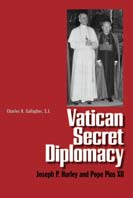
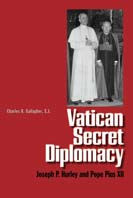 By William Doino Jr. | NOVEMBER 24, 2008
Vatican Secret Diplomacy
By Charles R. Gallagher, S.J.
Yale Univ. Press. 304p $40
Among the movers and shakers of American Catholicism, Joseph P. Hurley (1894-1967) surely deserves a high place. As priest, bishop, Vatican envoy and ally of Franklin D. Roosevelt, he was at the center of a number of 20th-century debates involving the church. As influential in his day as his contemporary, Francis Cardinal Spellman, Hurley remains far less known. Fortunately, with the publication of Charles Gallagher’s new work, Vatican Secret Diplomacy, this forgotten prelate finally receives the attention he deserves.
Gallagher, a Jesuit seminarian, is the author of a previous work on the Archdiocese of St. Augustine, Fla., which Hurley led from 1940 to 1967. Granted access to Hurley’s private papers, he has produced a fascinating study. As Gallagher tells it, Hurley was a classic pre-conciliar Catholic. He believed, as did many U.S. bishops, that a “blessed harmony” existed between the church and the United States, and thought patriotism “should have the strongest place in man’s affections.” Once ordained, a combative spirit animated him: “Dominating concepts of Catholic militarism, Americanism, patriotism, and athleticism would all be transferred to his religious outlook and his later diplomatic career…. To compromise, dither, walk away from a fight, or ‘not face up to facts’ placed one in the detestable category of ‘the Catholic milksop’.” Fighting the Good Lord’s fight-as he saw it-was Hurley’s specialty. A man of the world as well as the cloth, his abilities were recognized by his superiors, who assigned him posts in India, Japan and, finally, the Vatican. That Hurley took well to all these positions-despite any formal diplomatic training-speaks to his natural talents. Gallagher’s book is as much character study as religious biography. Hurley was a man of contradictions. Though outstanding in many respects, he sometimes allowed prejudice to overtake him. While serving in the papal secretariat of state (1934-40), he sympathized with the controversial priest Charles Coughlin. When he finally took a stand against “Charlie,” as he called him, it was only because of Coughlin’s criticism of Franklin D. Roosevelt, not his anti-Semitism. And yet, to Hurley’s credit, after he witnessed what was actually happening to Jews during the 1930s and 40s, he became their champion-delivering scorching sermons against Hitler and his “criminal effort to eradicate the Jews.” He also aligned himself with the White House, becoming “the most outspoken critic of American Catholic noninterventionism and arguably the most ardent Catholic supporter of Roosevelt’s wartime foreign policy.” At a time of rampant isolationism, this was daring. Even after America’s entry into the war, conflicts continued, especially when the United States and the Holy See differed. Invariably, Hurley took his government’s side, even promoting the State Department’s “Black Propaganda” against the papacy (meant to influence its political stands). Had the Vatican become aware of this, it could have ended Hurley’s ecclesiastical career. Though positive toward Hurley, Gallagher offers a one-sided view of Eugenio Pacelli (Pope Pius XII). Relying upon questionable evidence, Gallagher depicts Pacelli as overly cautious; more fearful of Communism than of Nazism; and not as outspoken as his predecessor, Pius XI. These are familiar but unpersuasive charges, given that Hitler’s most fervent supporters always blamed Pacelli for the anti-Nazi line taken by the Holy See. Gallagher errs when he writes that Cardinal Pacelli’s 1937 warning to the American diplomat Alfred Klieforth was “arguably the only time Pacelli personally expressed his disdain for Hitler.” In fact, as early as 1923, Pacelli, then papal nuncio in Germany, wrote to the Vatican (following Hitler’s failed putsch) and denounced the future dictator by name. One of Gallagher’s sources against Pius XII is Hurley himself, who revered Pius XI but doubted Pacelli. But the claim that there was a big difference between Pius XI and Pius XII is unconvincing, since Pius XI appointed Cardinal Pacelli his secretary of state and said the cardinal “speaks with my voice.” Some of Hurley’s criticisms may have been based on simple ignorance. Gallagher cites an entry in one of Hurley’s papers, for example, where Hurley praises Pius XI’s anti-Nazi encyclical Mit Brennender Sorge: “Ratti [Pius XI] said it in March 1937, even if Pacelli missed the point later.” Apparently, Hurley was unaware that Pacelli drafted Pius XI’s encyclical. Similarly, Hurley believed Pius XII’s wartime statements were not direct enough; but the Nazis themselves denounced Pius as a “mouthpiece of the Jewish war criminals,” and many rescuers have testified that Pius inspired them. In 1940, Pius XII suddenly appointed Hurley (still stationed in Rome) to be bishop of St. Augustine, a move that had the effect of placing the outspoken prelate in a “backwater” diocese. Gallagher sees this as Pius’s punishment for Hurley’s independent ways. But whatever tensions existed, the pope must have admired the feisty American on some level; for when the war ended, he surprised Hurley by reviving his diplomatic career, appointing him acting chief of the apostolic nunciature in Belgrade, Yugoslavia. There he courageously battled the Communists, even as he met with constant frustration. Hurley experienced far more success in St. Augustine, to which he returned in 1950, expanding the diocese through savvy real estate deals and religious gusto. If only Hurley’s knack for property development had been matched by a more prophetic imagination. A staunch traditionalist, he opposed the Second Vatican Council and even ridiculed John Courtney Murray, S.J., as a “master of double-talk.” Last, though an outspoken foe of racism abroad, Hurley was less sensitive to it back home. During 1964, the Rev. Martin Luther King Jr. transformed St. Augustine into “a major area of civil rights activity and media attention.” Hurley wanted no part of this. Declining to meet with King, he instead sent him an equivocal letter expressing Christian fraternity “among people of different races,” but warning against “any act which might occasion…ill will.” This was six years after the American bishops had issued-on the orders of a dying Pius XII-a pastoral condemning the sins of racial segregation. One wonders how anyone, observing Hurley’s failure, might have mistaken him for a “Catholic milksop.” William Doino Jr. is a Catholic researcher and writer who specializes in the history of the Holocaust.
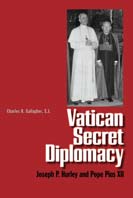
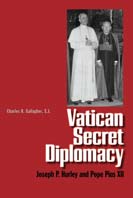 By William Doino Jr. | NOVEMBER 24, 2008
Vatican Secret Diplomacy
By Charles R. Gallagher, S.J.
Yale Univ. Press. 304p $40
Among the movers and shakers of American Catholicism, Joseph P. Hurley (1894-1967) surely deserves a high place. As priest, bishop, Vatican envoy and ally of Franklin D. Roosevelt, he was at the center of a number of 20th-century debates involving the church. As influential in his day as his contemporary, Francis Cardinal Spellman, Hurley remains far less known. Fortunately, with the publication of Charles Gallagher’s new work, Vatican Secret Diplomacy, this forgotten prelate finally receives the attention he deserves.
Gallagher, a Jesuit seminarian, is the author of a previous work on the Archdiocese of St. Augustine, Fla., which Hurley led from 1940 to 1967. Granted access to Hurley’s private papers, he has produced a fascinating study. As Gallagher tells it, Hurley was a classic pre-conciliar Catholic. He believed, as did many U.S. bishops, that a “blessed harmony” existed between the church and the United States, and thought patriotism “should have the strongest place in man’s affections.” Once ordained, a combative spirit animated him: “Dominating concepts of Catholic militarism, Americanism, patriotism, and athleticism would all be transferred to his religious outlook and his later diplomatic career…. To compromise, dither, walk away from a fight, or ‘not face up to facts’ placed one in the detestable category of ‘the Catholic milksop’.” Fighting the Good Lord’s fight-as he saw it-was Hurley’s specialty. A man of the world as well as the cloth, his abilities were recognized by his superiors, who assigned him posts in India, Japan and, finally, the Vatican. That Hurley took well to all these positions-despite any formal diplomatic training-speaks to his natural talents. Gallagher’s book is as much character study as religious biography. Hurley was a man of contradictions. Though outstanding in many respects, he sometimes allowed prejudice to overtake him. While serving in the papal secretariat of state (1934-40), he sympathized with the controversial priest Charles Coughlin. When he finally took a stand against “Charlie,” as he called him, it was only because of Coughlin’s criticism of Franklin D. Roosevelt, not his anti-Semitism. And yet, to Hurley’s credit, after he witnessed what was actually happening to Jews during the 1930s and 40s, he became their champion-delivering scorching sermons against Hitler and his “criminal effort to eradicate the Jews.” He also aligned himself with the White House, becoming “the most outspoken critic of American Catholic noninterventionism and arguably the most ardent Catholic supporter of Roosevelt’s wartime foreign policy.” At a time of rampant isolationism, this was daring. Even after America’s entry into the war, conflicts continued, especially when the United States and the Holy See differed. Invariably, Hurley took his government’s side, even promoting the State Department’s “Black Propaganda” against the papacy (meant to influence its political stands). Had the Vatican become aware of this, it could have ended Hurley’s ecclesiastical career. Though positive toward Hurley, Gallagher offers a one-sided view of Eugenio Pacelli (Pope Pius XII). Relying upon questionable evidence, Gallagher depicts Pacelli as overly cautious; more fearful of Communism than of Nazism; and not as outspoken as his predecessor, Pius XI. These are familiar but unpersuasive charges, given that Hitler’s most fervent supporters always blamed Pacelli for the anti-Nazi line taken by the Holy See. Gallagher errs when he writes that Cardinal Pacelli’s 1937 warning to the American diplomat Alfred Klieforth was “arguably the only time Pacelli personally expressed his disdain for Hitler.” In fact, as early as 1923, Pacelli, then papal nuncio in Germany, wrote to the Vatican (following Hitler’s failed putsch) and denounced the future dictator by name. One of Gallagher’s sources against Pius XII is Hurley himself, who revered Pius XI but doubted Pacelli. But the claim that there was a big difference between Pius XI and Pius XII is unconvincing, since Pius XI appointed Cardinal Pacelli his secretary of state and said the cardinal “speaks with my voice.” Some of Hurley’s criticisms may have been based on simple ignorance. Gallagher cites an entry in one of Hurley’s papers, for example, where Hurley praises Pius XI’s anti-Nazi encyclical Mit Brennender Sorge: “Ratti [Pius XI] said it in March 1937, even if Pacelli missed the point later.” Apparently, Hurley was unaware that Pacelli drafted Pius XI’s encyclical. Similarly, Hurley believed Pius XII’s wartime statements were not direct enough; but the Nazis themselves denounced Pius as a “mouthpiece of the Jewish war criminals,” and many rescuers have testified that Pius inspired them. In 1940, Pius XII suddenly appointed Hurley (still stationed in Rome) to be bishop of St. Augustine, a move that had the effect of placing the outspoken prelate in a “backwater” diocese. Gallagher sees this as Pius’s punishment for Hurley’s independent ways. But whatever tensions existed, the pope must have admired the feisty American on some level; for when the war ended, he surprised Hurley by reviving his diplomatic career, appointing him acting chief of the apostolic nunciature in Belgrade, Yugoslavia. There he courageously battled the Communists, even as he met with constant frustration. Hurley experienced far more success in St. Augustine, to which he returned in 1950, expanding the diocese through savvy real estate deals and religious gusto. If only Hurley’s knack for property development had been matched by a more prophetic imagination. A staunch traditionalist, he opposed the Second Vatican Council and even ridiculed John Courtney Murray, S.J., as a “master of double-talk.” Last, though an outspoken foe of racism abroad, Hurley was less sensitive to it back home. During 1964, the Rev. Martin Luther King Jr. transformed St. Augustine into “a major area of civil rights activity and media attention.” Hurley wanted no part of this. Declining to meet with King, he instead sent him an equivocal letter expressing Christian fraternity “among people of different races,” but warning against “any act which might occasion…ill will.” This was six years after the American bishops had issued-on the orders of a dying Pius XII-a pastoral condemning the sins of racial segregation. One wonders how anyone, observing Hurley’s failure, might have mistaken him for a “Catholic milksop.” William Doino Jr. is a Catholic researcher and writer who specializes in the history of the Holocaust.