

Author: cfliao
VATICAN CITY, 18 MAY 2009 (VIS) – Benedict XVI has sent a Message to Bishop Claudio Giuliodori of Macerata-Tolentino-Recanati-Cingoli-Treia, Italy, for the initiatives planned by the diocese – among them a Jubilee Year – to commemorate the fourth centenary of the death of the Jesuit Fr. Matteo Ricci, who died in Beijing, China on 11 May 1610.
Matteo Ricci, who was born in Macerata on 6 October 1552, was, the Pope writes, “gifted with profound faith and extraordinary cultural and academic genius”. He “dedicated long years of his life to weaving a profound dialogue between West and East, at the same time working incisively to root the Gospel in the culture of the great people of China. Even today, his example remains as a model of fruitful encounter between European and Chinese civilisation”.
“In considering his intense academic and spiritual activity, we cannot but remain favourably impressed by the innovative and unusual skill with which he, with full respect, approached Chinese cultural and spiritual traditions.
It was, in fact, this approach that characterised his mission, which aimed to seek possible harmony between the noble and millennial Chinese civilisation and the novelty of Christianity, which is for all societies a ferment of liberation and of true renewal from within, because the Gospel, universal message of salvation, is destined for all men and women whatever the cultural and religious context to which they belong.
“What made his apostolate original and, we could say, prophetic, was the profound sympathy he nourished for the Chinese, for their cultures and religious traditions”, the Holy Father adds. Ricci was likewise “a model of dialogue and respect for the beliefs of others” and “made friendship the style of his apostolate during his twenty-eight years in China”.
The Jesuit remained faithful to this style of evangelisation to the end of his life, “using a scientific methodology and a pastoral strategy based, on the one hand, on respect for the wholesome customs of the place, which Chinese neophytes did not have to abandon when they embraced the Christian faith and, on the other, on his awareness that the Revelation could enhance and complete” those customs. As the Fathers of the Church did in the time of the encounter between the Gospel and Greco-Roman culture, the author of the “Treatise on Friendship” undertook his “farsighted work of inculturation of Christianity in China by seeking constant understanding with the wise men of that country”.
“Following his example, may our own communities, which accommodate people from different cultures and religions, grow in a spirit of acceptance and of reciprocal respect”, the Holy Father concludes.
 VATICAN CITY, MAY 19, 2009 (Zenit.org).- The director of the Vatican press office is affirming the importance of the Internet as a tool for delivering the Gospel message to people in many different situations.
Jesuit Father Federico Lombardi stated this Monday at the Westminster diocesan seminary in an address to media professionals on the occasion of World Communications Day, which will be celebrated Sunday.
The priest underlined Benedict XVI’s call to reach out to the “digital generation,” a press release from the bishops’ conference of England and Wales reported today.
In the address, published on the Web site of the Catholic Communications Network, Father Lombardi noted the importance of using “traditional technologies and forms of communication” that are “still necessary to serve a large part of humanity.”
“At the same time,” he added, “we cannot but be attentive to the direction in which communications are moving nor can we allow ourselves to fall out of touch with the latest advancements in the world of communications.”
Drawing on his experience as a Vatican spokesperson, he recalled recent criticisms by the media against the Pope, including his “Regensburg discourse, the bishop Williamson affair, or the controversy over [his] statements regarding condoms and the spread of HIV and AIDS in Africa.”
“It is a mistake to think that we ought to avoid debate,” he stated. “We must always seek to conduct debate in a way that leads to a better understanding of the Church’s position — and we must never get discouraged.”
Presence
Father Lombardi referenced recent changes in social communications, noting that the Internet has multiplied the number of voices spreading information. In this environment, he said, it is important to “maintain sound points of reference in the flow of communications in the world.”
He highlighted the Pontiff’s message for World Communications Day, stating: “The Pope knows that the Church will be an efficacious presence in the world that is taking shape only to the extent that she succeeds in keeping the truths of the faith in close touch with the emerging culture and the younger, growing generations. This is why he puts such emphasis on relationships.”
The challenge in keeping a strong presence in the culture, the press office director noted, is focusing not only on content distribution, but “greater and greater interactivity.”
He challenged the media professionals, saying: “In our service to the Church, we need to be constantly asking ourselves whether the limits and defects of our own communications skills in any given moment are making it more difficult for others to understand the Church’s message, so that they reject it, or whether the message itself is being rejected, even though it has been understood — or precisely because it has been understood.”
The Jesuit continued: “We cannot fool ourselves into thinking that a perfect communications strategy could ever make it possible for us to communicate every message the Church has to offer in a way that avoids contradiction and conflict.
“Truth be told, success in this sense would be a bad sign — at the very least, it would indicate ambiguity or compromise, rather than authentic communication.”
Communion
The goal, Father Lombardi said, is to “further the construction of a culture of respect, of dialogue and friendship, and to place the immense potential of contemporary communications in the service of communion in the Church and of the unity of the whole human family.”
The priest closed with a memory of a moment in which he worked to televise a youth gathering with Pope John Paul II, so that other European cities could take part through two-way satellite links.
After the Pontiff exchanged greetings with the young people in other cities, he exclaimed: “What a marvelous thing is this television! I can see and speak with my young people in Krakow as though they were right here. Blessed be television!”
Father Lombardi affirmed that despite “all the terrible, awful things that television does,” it can be used for good, to create communion, and “it can truly be blessed.”
This is our vocation, he stated, “to make sure that the press, the radio and television are tools and paths toward blessedness.”
The priest challenged his listeners to work harder “so that we might be able to say with greater and greater conviction: the Internet is truly blessed!”
COLOMBIA: SEMINARY FOR REGIONAL APOSTOLIC PLANNING
During April a meeting was held at the Javeriana Pontifical University in Cali, Colombia. This was the first part of a seminar on Apostolic Planning for the Jesuit houses and works in the Valle del Cauca Region and the Pacific Coast. Many Jesuits and their collaborators were present who have responsibility in the educational, social, pastoral and administrative management of those institutions. After a period of common reflection on the concept of “sustainability” the participants met in study groups and in plenary sessions to analyze the different components of a sustainable development (economic, environmental, political, social, cultural, spiritual), and the apostolic dimensions of the institutions the Society runs in the region (communication, education in colleges and universities, pastoral work in parishes and churches, spiritual radiation, social apostolate). Based on these conversations a second seminar is planned to deepen mutual knowledge and to define common action. In order to do this, the Provincial has named a committee representing the various works in the area. Father Jorge Humberto Peláez, rector of Javeriana Pontifical University in Cali, has been named president of the committee.
ITALY: AFTER THE EARTHQUAKE
In the early morning of 6 April a terrible earthquake struck Abruzzo Region and L’Aquila, its principle town. Nearly 200 inhabitants were killed as they slept, hundreds were injured and many thousands lost their homes. No Jesuits were injured because our house was closed last year and the university hostel handed over to the care of others. The former residence was, however, seriously damaged and Father Lino Dan, who was in L’Aquila that night was trapped in the rubble; he was rescued uninjured, a near miracle. The Italian Province offered its help by means of its various apostolates (Christian Life Communities, Lega Missionaria Studenti, Roman University Chapel, etc.) for a fund-raising through its ONG Magis, and for assistance and solidarity to the people who lives in shelters, with volunteers who put themselves at the disposal of the Civil Defense and the local Dioceses. The Province is also considering offering a pastoral service in the months ahead, based on the requests of the local bishops.
LONDON: FATHER LOMBARDI SPEAKS ON COMMUNICATION
Father Federico Lombardi, director of the Vatican Pres Office, Vatican Radio and Vatican Television will deliver a lecture in London May 18 on: New Technologies, New Relationships. Promoting a Culture of Respect, Dialogue and Friendship. He will be a guest of the Catholic Communications Network on the occasion of the World Communication Day, May 24.
MALTA: YOUTH PRIZE
On May 19 in Aachen, Germany, the 2009 European Charlemagne Youth Prize Award Ceremony will be held. Jesuit Refugee Service (JRS) volunteer Nicolette Busuttil, a 20-year old from Malta, is the Maltese nominee. The prize is awarded by the President of the European Parliament and the Foundation of the International Charlemagne Prize of Aachen; it is dedicated to young people between the ages of 16 and 30, who are engaged in projects promoting integration among European countries. Since the end of 2006, Nicoletta Busuttil, a law student, has visited asylum seekers in Safi and Hal Far detention centres in Malta. Her work has consisted in providing moral support through informal contact with asylum seekers and assistance with religious services on Sundays. She has been a sympathetic ear for asylum seekers in detention, hoping to express some solidarity in a context that often presents opposite signals. “I see my contribution as a necessary extension of my personal beliefs in the dignity of every human being”, Nicolette said. The prize consists of a sum between 2.000 and 5.000 euro, to use for projects of development and integration among European youths.
ROME: MEETING OF JESUIT BROTHERS
The annual meeting of the Italian Jesuit Brothers will take place 11-15 May at the Retreat House of the Holy Heart in Galloro. Don Massimo Grilli, an expert for Judaism and manager of the Biblical Theology Department of the Gregorian University will deliver a speech on “Relations between Old and New Testament” and their consequences on Jewish-Christian relations. Hopefully, there will be a contribution by a rabbi. Father Milan Zust, S.J., the superior of Centro Aletti, who is committed in ecumenical relations and relations between Oriental and Western Churches, will speak on the improvements and difficulties in the reconciliation among Christian Churches. Father Michele Simone, writer for Civiltà Cattolica, will offer an insight of the Italian socio-political situation and Father Ignacio Echarte, secretary general of the Society will speak about the Society after the General Congregation and the perspectives proposed to Father General. A day visit to Subiaco, where St. Benedict lived, will be also part of the agenda.
MACAU (UCAN) – The Macau Ricci Institute has marked the anniversary of the death of famous Jesuit priest Father Matteo Ricci, a Sinologist who promoted Christianity in China while introducing the country’s culture to the West.
Next year will be the 400th anniversary of the death of the priest who lived the final 27 years of his life in China.
The Jesuit-run Macau Ricci Institute held a forum on May 11, the day Father Ricci died in Beijing in 1610.
The forum looked at the priest’s remarkable career in the country from the time he arrived in Macau, covering his travels through China to Beijing.
Father Gianni Criveller of the Pontifical Foreign Missions Institute (PIME) spoke on “Matteo Ricci’s Ascent to Beijing (1583-1610).”
Father Ricci, known as Li Madou to the Chinese, was a prolific writer, a Sinologist, linguist and an accomplished scientist.
Father Ricci, an Italian, began to learn the Chinese language on arrival in Macau, then a Portuguese colony and the gateway for foreigners entering China. After mastering the language, the priest set off for Beijing, arriving there in 1601.
Father Criveller, an Italian, told UCA News that he presented some lesser known aspects and misconceptions surrounding Father Ricci’s journey to Beijing. The priest made four lengthy stops between Macau and Beijing, at Zhaoqing and Shaoguan (then called Shaozhou) in Guangdong, Nanchang in Jiangxi and Nanjing in Jiangsu.
Father Criveller said the talk was a follow-up on his earlier forum speech last October, when he focused on Father Ricci’s life before coming to China. The two speeches will be published in a booklet in English and Chinese next year to commemorate the Jesuit’s 400th death anniversary.
Many people viewed Father Ricci’s life in China as a success.
“In fact, he had many setbacks and difficulties,” such as his discouragement upon seeing his companions die on the trip to Beijing, said Father Criveller.
Father Ricci was detained by officials when a crucifix was found among his gifts to the Chinese emperor. They believed it was a totem of black magic to have a figure nailed on a cross while the public depiction of a naked body was also unacceptable to the Chinese at the time.
Father Ricci is often remembered as a man of science, but he was much more than that, Father Criveller said.
Some of the Jesuit’s techniques for introducing Christianity to China were controversial at the time. He preached the message that God was one and the same with the Chinese deity, the “Lord of Heaven”.
However, Father Criveller said Father Ricci had “talked and written about Christ … on certain occasions when people were ready to learn about Christ.”
The May 11 evening forum, chaired by Jesuit Father Artur Wardega, director of the Macau Ricci Institute, was followed by a concert and a cocktail party for the participants to exchange views.
Father Criveller, based in Hong Kong, has been living in Hong Kong, Macau, Taiwan and mainland China for 18 years. The PIME scholar researches, teaches and writes on the reception of Christianity in China.
BANGKOK (UCAN) – Bangkok may be filled with skyscrapers and glitzy malls, but in certain parts of the country, people do not have proper access to drinking water.
University students from the capital area recently experienced this reality at a Jesuit-run work camp in a village in the northern Chiang Mai province. Forty-six participants from 15 universities, who attended the Xavier Voluntary Students Work Camp, spent two weeks building a small dyke for villagers, organizing games and activities for the children, and providing them meals.
At an evaluation meeting held May 8-10 at Xavier Hall, the Jesuits’ residence in Bangkok, participants of the camp shared they now have a better understanding of the lives of poor people, whom they used to shun. Some even said they wanted to dedicate themselves to working for marginalized people after graduation.
The students took part in the work camp in Ban Gilsawaek of Maecham district, Chiang Mai province, in March under the supervision of Jesuit Father Maharsono Probho, the national university chaplain. For two weeks, they built a cement dyke 11 meters long and 8 meters high to dam water for drinking and other daily needs.
The village, comprising 60 families, have had to use a small well two kilometers away. This situation contributed to sanitation problems in the village.
According to Father Probho, the annual camp is open to students of all religions. Twenty-one of this year’s camp participants were Catholics.
The community that the Xavier Voluntary Students Work Camp selects for its outreach work is “also not necessary a Catholic community,” said the Indonesian priest.
He explained that the camp aims to increase participants’ social awareness and to open their “eyes, minds and hearts to vulnerable people.”
The group later conducts its own social analysis and reflection to become aware of how social problems are in fact “structural problems” arising out of an “abuse or violation of people’s rights,” said the priest.
He said the Ban Gilsawaek villagers grow corn as animal feed but do not receive an adequate income because over supply. The villagers are also in debt, and increasing deforestation and the use of large amounts of water for this form of agriculture add to their woes.
Father Chanchai Temarunrung, from Chiangmai diocese, who initiated the water management project at this village, helped students reflect on their service to the villagers during their May meeting.
Natthida Niropas, a third-year student of Chulalongkorn University and chairperson of Xavier Voluntary Students Work Camp Group, said this was her third time joining the camp. She added that her experience of the sincerity and thoughtfulness of villagers has inspired her to be the same to others.
Rayakorn Sanitsom, a second-year student of Kasetsart University, said the camp helped her to understand better the way of life of poor villagers and the challenges they face. She added that she was moved by how they are able to continue living joyfully in spite of the hardships they face.
BANGKOK (UCAN) – Bangkok may be filled with skyscrapers and glitzy malls, but in certain parts of the country, people do not have proper access to drinking water.
University students from the capital area recently experienced this reality at a Jesuit-run work camp in a village in the northern Chiang Mai province. Forty-six participants from 15 universities, who attended the Xavier Voluntary Students Work Camp, spent two weeks building a small dyke for villagers, organizing games and activities for the children, and providing them meals.
At an evaluation meeting held May 8-10 at Xavier Hall, the Jesuits’ residence in Bangkok, participants of the camp shared they now have a better understanding of the lives of poor people, whom they used to shun. Some even said they wanted to dedicate themselves to working for marginalized people after graduation.
The students took part in the work camp in Ban Gilsawaek of Maecham district, Chiang Mai province, in March under the supervision of Jesuit Father Maharsono Probho, the national university chaplain. For two weeks, they built a cement dyke 11 meters long and 8 meters high to dam water for drinking and other daily needs.
The village, comprising 60 families, have had to use a small well two kilometers away. This situation contributed to sanitation problems in the village.
According to Father Probho, the annual camp is open to students of all religions. Twenty-one of this year’s camp participants were Catholics.
The community that the Xavier Voluntary Students Work Camp selects for its outreach work is “also not necessary a Catholic community,” said the Indonesian priest.
He explained that the camp aims to increase participants’ social awareness and to open their “eyes, minds and hearts to vulnerable people.”
The group later conducts its own social analysis and reflection to become aware of how social problems are in fact “structural problems” arising out of an “abuse or violation of people’s rights,” said the priest.
He said the Ban Gilsawaek villagers grow corn as animal feed but do not receive an adequate income because over supply. The villagers are also in debt, and increasing deforestation and the use of large amounts of water for this form of agriculture add to their woes.
Father Chanchai Temarunrung, from Chiangmai diocese, who initiated the water management project at this village, helped students reflect on their service to the villagers during their May meeting.
Natthida Niropas, a third-year student of Chulalongkorn University and chairperson of Xavier Voluntary Students Work Camp Group, said this was her third time joining the camp. She added that her experience of the sincerity and thoughtfulness of villagers has inspired her to be the same to others.
Rayakorn Sanitsom, a second-year student of Kasetsart University, said the camp helped her to understand better the way of life of poor villagers and the challenges they face. She added that she was moved by how they are able to continue living joyfully in spite of the hardships they face.
On April 18th Father General left the Ivory Coast and traveled to Ghana. After a visit in the capital, Accra, he went to Cape Coast for a meeting of the Conference of Major Superior of Africa and Madagascar (JESAM). Before leaving Abidjan, Fr. Nicolás planted a tree in the garden of the Theologate as a symbolic gesture, and quipped, “please, send me news about this tree in your ex-officio letters!”
Father General attended the JESAM meeting until its conclusion on Friday, April 24th. During the meeting many of the challenges the Society encounters in Africa were examined, as well as the functioning of the Assistancy’s common houses and interprovincial collaboration. The meeting afforded Father Nicolás the opportunity to meet the Provincials and Regional Superiors who attended.
The final days of his stay in Africa were devoted to Nigeria. He visited Benin City where the Society has a novitiate, spiritual center and St. Joseph Parish. He visited Abuja where Loyola Jesuit College is located and Lagos, where the Provincial and his assistants live; there we run a parish and a secondary school, both dedicated to St. Francis. When he landed in Lagos international airport Father General was escorted by the airport’s security services to a private Jet plane that was put at his disposal for all internal flights. Everywhere he was warmly greeted. In Abuja, the federal capital of Nigeria, the Spanish ambassador, who had welcomed Fr. General at the airport, offered a dinner in his honor at his private residence. Many civil and religious authorities as well as numerous benefactors and friends of the Society attended.
A curious note: during this first visit to Africa Fr. Nicolás planted trees in four different places: a symbol, perhaps, of a more green and luxuriant future in Africa?
After his return to Rome, on May 2, Father General responded to two brief questions.
This was your first visit to Africa as General of the Society, and, if I am correct, your very first visit to Africa. What are your first impressions?
An overwhelming impression of very vital, very intelligent, very energetic, very kind, very joyful people… that do not receive the care and attention that they deserve. And that they are people who can still dream and hope for a better future. It has been a refreshing visit in many human and religious senses. I came back with much hope.
In the fifteen months since your election you have traveled to three continents. How is it possible to address the problems the Society of Jesus faces in these parts of the world?
In fact one may say that I have visited Four Continents, but only partially and, therefore, it would be too risky to try to generalize from what I have seen or heard. What is obvious to me is that, as St. Ignatius liked to repeat, the real discernment has to take place in each Continent; and it is imperative for us in Rome to keep in mind the enormous wealth and complexity of each different situation. A very deep dialogue with the men in the spot has to take place for a fair and meaningful governance of the Society.
The Rev. Donald G. Clifford, 79, a Jesuit professor and executive at St. Joseph’s University, died of a stroke Monday at his university residence.
Father Clifford had been at St. Joseph’s since 1967, teaching theology from 1967 to 1976 and again from 1983 to 1998.
He was the university’s vice president for development in 1982 and 1983 and director of its Faith-Justice Institute from 1983 to 1990.
In 1967, Father Clifford became the first director of what is now the university’s Institute for Jewish-Catholic Relations. He stepped down as director emeritus in 2007.
From 1974 until this year, he was minister in ecumenical relations for the university and the Maryland Province of the Society of Jesus, which administers the Jesuit order from South Jersey to North Carolina.
From 1975 to 1983, he was editor of the National Jesuit News, at the time published monthly during the academic year.
Born in Philadelphia, Father Clifford graduated from St. Joseph’s Prep in 1947 and what is now the university in 1951.
He entered the Jesuit order in 1951 and studied philosophy at Weston (Mass.) College from 1954 to 1956.
Before Cardinal Lawrence Shehan of Baltimore ordained him in 1962, he taught Latin, ancient Greek, English, and history at Scranton Prep from 1956 to 1959, then studied theology at Woodstock (Md.) College.
From 1964 to 1967, Father Clifford continued theological studies at the University of Strasbourg in France and made his final commitment to the Jesuits at St. Joseph’s in 1967.
From 1969 to 1983, he also served as chaplain at the Merion convent of the Sisters of the Assumption.
Father Clifford is survived by a niece, Jane Mickler.
A wake is scheduled for 3 to 5 p.m. today at Manresa Hall, 5600 City Ave. A Funeral Mass will be said at 10 a.m. tomorrow at St. Matthias Church, 128 Bryn Mawr Ave., Bala Cynwyd. Burial will be in the Jesuit Cemetery, Wernersville, Berks County.
by Loyola Press on May 7, 2009
 Fr. James Martin wrote an opinion piece for The Boston Globe this week. Reports claim that the Vatican has accepted the prayers of John Henry Newman as a miracle attributed to curing a man. Fr. Martin offers the historical context of John Henry Newman’s life, the possible affects of Newman’s beautification, and offers insight into the the type of saint Cardinal John Henry Newman could be.
You can read this reflection by Fr. James Martin, SJ, at The Boston Globe website.
Loyola press release

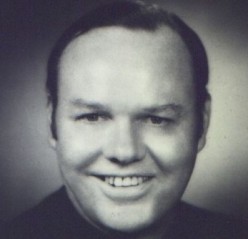
The Rev. Thomas Clancy, S.J., a crucial figure in the history of Loyola University New Orleans, passed away on April 13 at the age of 85.
Clancy received a bachelor of arts degree in 1948 from Spring Hill College in Mobile, Ala. In 1955, he was ordained a priest after studying at St. Charles College in Grand Coteau, La., Spring Hill College and the University of Louvain in Belgium. Clancy also received a master’s degree from Fordham University and a doctorate from the University of London in political science.
Clancy joined the Loyola faculty in 1960, where he taught political science for 10 years and served as chair of the Department of History and Political Science from 1966 to 1969. From 1968 to 1970, he served as academic vice president. He was editor of the Jesuit magazine, America, from 1970 to 1971. In 1971, he was named Provincial Superior of the New Orleans Province of the Society of Jesus, covering 10 states in the South and Southwest.
In 1978, he was vice president for communications at Loyola, responsible for the operations of WWL radio and WWL-TV, which was housed on the campus until it was sold in 1989. He then served as director of the Jesuit Seminary and Mission Bureau from 1989 to 2000.
Clancy was instrumental in moving the Jesuit archives from Grand Coteau in the mid 80s to Loyola’s campus. Former Loyola Public Affairs director, Joan Gaulene, A’58, worked with Clancy for many years.
“I knew him for so long at Loyola and was delighted when I retired that he asked me to work for him in the Jesuit archives,” said Gaulene, who is the assistant to the Provincial archivist. “Although he has been gone from Loyola for quite some time, I still feel the loss. He had a great personality and was very outgoing, friendly and brilliant.”
Clancy was a prolific writer, penning numerous articles over the years and authoring the books, “An Introduction to Jesuit Life,” “Conversational Word of God” and “A Literary History of the English Jesuits: A Century of Books, 1615-1714.”
Visitation for Clancy will be held from 9 -11 a.m. on Monday, April 20, at Holy Name of Jesus Catholic Church. A funeral mass will follow at 11 a.m.
Clancy is survived by a brother and sister-in-law. In recognition of Clancy’s ministry, and to prepare young Jesuits and to care for elder Jesuits, donations may be sent to “The Jesuits,” 710 Baronne St., Ste. B, New Orleans, LA 70113. Lake Lawn Metairie Funeral Home is in charge of arrangements. To view and sign the guest book, please visit www.lakelawnmetairie.com.