

Author: cfliao
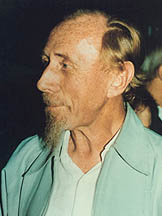
NEW DELHI (UCAN) — The people of Karamchedu knew where their hopes lay. Father Michael Anthony The dalit, former “untouchable” people, in Andhra Pradesh’s Prakasam district refused help even from the state government when a caste feud left them homeless and desperate in 1985. Instead, they turned to Father Michael Anthony Windey’s Village Reconstruction Organization (VRO) for help. The village leaders said they had found the Jesuit priest’s team inspiring. Father Windey, who died on Sept. 20 at age 88, was a figure of hope for thousands of villagers across India. Karamchedu villagers had already seen what the VRO had done for neighboring Kangadapada and Bapadlal villages in the wake of devastation wreaked by a cyclone. Thanks to the organization’s work there, the dalit villagers were able to abandon their mud huts and move into concrete buildings. New drainage systems improved hygiene, while newly planted trees brightened the villages. Child and adult education improved, and job skills taught by VRO volunteers fired youngsters with ambition. “We’ll help, yes, but on our terms,” Father Windey had replied when Karamchedu villagers approached him. He then shot them a question. “What have you done together?” “Nothing much,” they said. Then came the next question: “What do you think you can do?” The slightly built Belgian missioner with a goatee put these questions to thousands of landless laborers, fishermen with little fishing equipment, craftsmen with little security and tribal people displaced by mega-projects. Repeated over four decades, they worked wonders in hundreds of villages across India. For Father Windey, all crises were God-given opportunities for people’s development and growth. He used to say he hated providing cosmetic relief that kept people dependent and poor. The Jesuit also cited a chance meeting with Mahatma Gandhi and a later association with Gandhi disciple Jayaprakash Narayan as having convinced him of the need to make Indian villages more viable, complementing urban development. According to the priest’s analysis, about 2,700 urban centers in India draw the best from the country’s more than 575,000 villages. The result — villagers flood towns and slums mushroom. In 1962, more than 82 percent of Indians lived in villages. Within 20 years, this figure had fallen to 77 percent. To check this trend, Father Windey tried to make villages more livable, seeking to bring changes from within while rebuilding them. He insisted on people’s participation in rebuilding disaster-hit villages in new areas. This helped villagers overcome caste differences, he said, because people considered having a home more important than sticking to their caste. Over the decades, VRO villages have become symbols of equality and security. Social work might have been the last thing on his mind when his superiors sent him to India in 1946 to continue his priestly studies and work in the Chotanagpur region of eastern India. But he was at the forefront of Church relief work when famines hit Bihar and Madhya Pradesh in the 1960s. The late Cardinal Valerian Gracias of Bombay had noted his dynamism and, as head of the Indian Catholic Church, requested the young Jesuit’s help in Andhra Pradesh when it was devastated by a cyclone in 1969. Father Windey arrived in the southern Indian state with a single volunteer and little else. But he soon gathered voluntary groups, individuals and Church workers into a common relief effort to help cyclone victims. They started work in 10 villages, which eventually became models for others. Father Windey always chose the most isolated and least known villages to work in. Now, hundreds of such villages in Andhra Pradesh, Orissa and Tamil Nadu states have become beacons of hope for those suffering from illiteracy and oppression. The VRO has also brought about changes in the way NGOs approach village work. “He turned job seekers into volunteers, teachers into learners and officials into activists,” says Jose Vincent, who had worked with the Jesuit for decades. Bureaucrats and Church leaders also became listeners and sympathized with the Jesuit’s way of conducting interreligious dialogue at the grassroots level. The Andhra Pradesh government itself often turned to Father Windey for ideas and help in crises, such as during the caste feud in Karamchedu that claimed 15 lives 24 years ago.
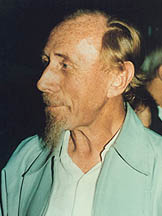
Windey (file photo)
Composer Talks About the Spirituality Behind His Work
By Edward Pentin
ROME, SEPT. 10, 2009 (Zenit.org).- You may not recognize his name, but you will almost certainly be familiar with his music.
Maestro Ennio Morricone is widely regarded as one of Hollywood’s finest film score composers. Best known for the memorable and moody soundtracks to the “Spaghetti Westerns” of the 1960s, such as “The Good, the Bad and the Ugly,” “A Fistful of Dollars,” and “Once Upon a Time in the West,” to many Catholics he is perhaps best loved for his moving score in “The Mission,” a 1986 film about Jesuit missionaries in 18th-century South America.
But his contribution to the movie industry extends far beyond his most famous works, having scored around 450 films and worked with Hollywood’s leading directors, from Sergio Leone and Bernardo Bertolucci to Brian De Palma and Roman Polanski.
And at 80, he’s still going strong. The legendary composer has just completed the soundtrack to Giuseppe Tornatore’s “Baaria,” an Italian picture which opened this year’s Venice Film Festival, while Quentin Tarantino invited him to write the score for his latest film, “Inglourious Basterds” (scheduling difficulties prevented Morricone from doing so, but he allowed Tarantino to use clips of his previous work in the film instead).
The renowned Italian composer also continues to pick up highly prestigious awards: earlier this year, Nicolas Sarkozy, the French President, appointed him to the rank of Knight in the Order of the Legion of Honor — the country’s highest honour. That’s in addition to a lengthy list of other major awards including an Honorary Academy Award, five Oscar Nominations, five Baftas, and a Grammy.
Yet Maestro Morricone, who was born in Rome, prefers to keep out of the limelight and rarely gives interviews. So it came as a surprise when he kindly agreed to make an exception one August morning, and invited me to his central Rome apartment to talk principally about his faith and his music.
His home is much as you would expect: An immaculate black grand piano sits beside the window of a grand and tastefully decorated sitting room, artistically lined with murals, classical paintings and mahogany panels. But Morricone, who has a wife and four grown up children, is a humble man without airs, and he responds to questions in typically Roman fashion: directly and to the point.
Inspiration
I begin by asking him if his music, which many consider very spiritual, is inspired by his faith. Although he describes himself as a “man of faith,” he takes a very professional yet simple view of his work and says his faith doesn’t inspire him in most of his writing. If the movie is not about religion, he won’t think about God and the Church, he says. “I think of the music that I have to write — music is an abstract art,” he explains. “But of course, when I have to write a religious piece, certainly my faith contributes to it.”
He adds that he has inside of him a “spirituality that I always retain in my writing,” but it’s not something he wills to be present, he simply feels it.
“As a believer, this faith is probably always there, but it’s for others to realize it, musicologists and those that analyze not only the pieces of music but also have an understanding of my nature, and the sacred and the mystical,” he explains. However, he says he believes that God helps him “write a good composition, but that’s another story.”
He gives a similarly professional and straightforward answer when asked if he has any qualms about writing music for gratuitously violent films. “I am called to serve the film,” he says. “If the film is violent, then I compose music for a violent film. If a film is about love, I work for a film of love. Perhaps there can be violent films in which there is sacredness or have mystical elements to the violence, but I don’t willingly look for these films. I try to strike a balance with the spirituality of the film, but the director doesn’t always think the same way.”
Ennio Morricone began his music career in 1946 after receiving a trumpet diploma. The next year, he was already composing theatre music, as well as playing in a jazz band to support his family. But his career in film music, which began in 1961, took off a couple of years later when he started working with his old school friend Sergio Leone and his brand of “Spaghetti Westerns.”
He’s perhaps most famous for that genre, yet he says they make up only eight percent of his repertoire, and he has turned down a hundred other such movies. “Everyone asks me to make Westerns,” he says, “but I tend not to do them because I prefer variety.”
A technical miracle
Turning to “The Mission,” he says the great thing about that film score was its “technical and spiritual effect.” By that, he means the way it managed to combine three musical themes related to the movie. The presence of violins and Father Gabriel’s oboe represent “the Renaissance experience of the progress of instrumental music.” The film then moves on to other forms of music that came out of the Church reforms of the Council of Trent, and ends with the music of the native Indians.
The result was a “contemporary” theme in which all three elements — the instruments that came out of the Renaissance, the post-conciliar reformed music, and the ethnic melodies — harmoniously come together at the very end of the film. “The first and second theme go together, the first and third can go together, and the second and third go together,” Morricone explains. “That was my technical miracle which I believe was a great blessing.”
But the Italian composer says he doesn’t have a formula for a successful film score. “If I knew, I would always write more music like this,” he says, adding that the quality of the music depends on whether he is happy or sad. “When I’m less happy, I’m always saved by professionalism and technique,” he says. He also won’t mention any favourite pieces, or favourite movies. “I love them all because all have given me some kind of torment and suffering when working on them, but I mustn’t and won’t make a distinction,” he says.
We turn to the subject of another keen musician: Pope Benedict XVI. Morricone says he has a “very good opinion” of the Holy Father. “He seems to me to be a very high minded Pope, a man of great culture and also great strength,” he says. He is particularly complimentary about Benedict XVI’s efforts to reform the liturgy — a subject about which Morricone feels very strongly.
“Today the Church has made a big mistake, turning the clock back 500 years with guitars and popular songs,” he argues. “I don’t like it at all. Gregorian Chant is a vital and important tradition of the Church and to waste this by having kids mix religious words with profane, Western songs is hugely grave, hugely grave.”
He says it’s turning the clock back because the same thing happened before the Council of Trent when singers mixed profanity with sacred music. “He [the Pope] is doing well to correct it,” he says. “He should correct it with much more firmness. Some churches have taken heed [of his corrections], but others haven’t.”
Maestro Morricone looks fit and considerably younger than his age, which enables him to continue to give concerts around the world. In fact, he is in more demand than ever: next month he’ll be performing his soundtracks at the Los Angeles Hollywood Bowl.
Yet despite all his fame and accolades, this famous Italian composer hasn’t lost any of his Roman earthiness and humility. It’s perhaps this, as much as his stirring and unique compositions, which makes him one of Hollywood’s greats.
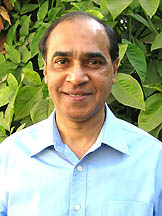
Jesuit Father Noel Sheth,
PUNE, India (UCAN) — Christian and Hindu leaders in India as well as scholars from around the world have praised the performance of a Jesuit priest in convening the History of Religion section of the recent 14th World Sanskrit Conference.
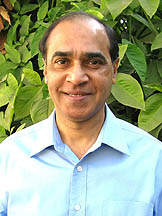
chief convener for History
of Religion at the 14th World Sanskrit Conference
Father Noel Sheth, a professor of Indian religions served as chief convener of the History of Religion section at the meeting in Kyoto, Japan, the first Catholic priest so honored. The International Association of Sanskrit Studies had invited the University of Kyoto to host the triennial conference this year, held Sept. 1-5.
The Jesuit “did an excellent job as the convener,” acknowledged Muneo Tokunaga, head of the university’s Sanskrit department. He selected “top-rate research papers” and appointed the best person to chair each session, the Japanese scholar told UCA News by e-mail.
Tokunaga, a Buddhist and chairperson of the conference’s organizing committee, added that the priest’s “deep insight” into Indian culture helped promote better understanding between Hinduism and other religions.
In India, Father Job Kozhamthadam likewise credited his fellow Jesuit’s lectures and writings with linking various religions. In the process, said the president of Jnana Deepa Vidyapeeth (university of knowledge light), a Jesuit-run seminary in Pune, Father Sheth has introduced Catholic insights and beliefs into Indian culture and traditions.
The priest’s selection as chief convener is “a great honor to the Catholic Church in India,” remarked Bishop Thomas Dabre of Poona (Pune), an expert on Indian religions.
Father Sheth’s scholarship in Sanskrit symbolizes the Catholic Church’s commitment to preserve authentic Indian ancient culture, tradition and heritage, the prelate said.
Sanskrit provided Father Sheth a gateway to understand Hindu culture, the way of life and thought that helped him promote interfaith dialogue and intercultural relations, Bishop Dabre continued.
The bishop once taught Indian spirituality and traditions at Jnana Deepa, Asia’s largest seminary, where Father Sheth currently teaches.
Mohan Dhadphale, former head of the Sanskrit department at Fergusson College in Pune, revealed that Father Sheth had convinced him Christianity is an Eastern religion, not a Western one as propagated by some Hindu radicals.
The Hindu scholar and Father Sheth’s former teacher said the Rig-Veda, the first of the ancient Hindu Veda texts, mentions the origins of Jesus Christ.
“Therefore, the study of Sanskrit helps scholars such as Father Sheth to promote an enriching interfaith dialogue,” said Dhadphale, who attended the Kyoto meet.
Some 500 scholars of Sanskrit and Prakrit, another ancient Indian language, presented research papers in 15 subject sections.
Each of the sections, which included the Vedas, Poetry, Drama and Aesthetics, Scientific Literature, Buddhist Studies, Jain Studies, Philosophy and Ritual Studies, had a chief convener.
Father Sheth told UCA News on Sept. 9 that his work as convener had given him the opportunity to demonstrate that the Catholic Church is “very much engaged” in preserving ancient Indian culture, tradition and heritage.
He noted that in India, Sanskrit and Prakrit are considered the preserve of Hindus, Buddhists and Jains.
“Christians in India are often considered as foreigners who are not in the mainstream of Indian life and culture,” he explained. On the contrary, his selection dispels that notion and convinces people that the Church “is very much in the mainstream of Indian life.”
He also observed that Sanskrit and Prakrit had played crucial roles in Indian art’s profound influence on Asian countries, where Hinduism and Buddhism testify to the spread of Indian culture and religion.
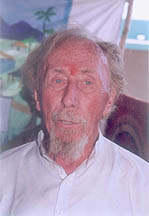
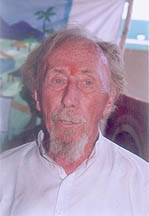
HYDERABAD, India (UCAN) — Church people and social workers in India are mourning the death of a Belgian Jesuit missioner who used Gandhian methods to revolutionize village life in India. Father Michael Father Michael Anthony Windey, founder of the Village Reconstruction Organization (VRO), died on Sept. 20 at Heverle in Belgium, where he had been undergoing treatment for liver cancer since January. He was 88. Sabien Arnaut, Father Windey’s niece, told UCA News from Belgium that her uncle’s last wish was to return to India, but doctors ruled it out, saying he would not survive a flight back. “He was very weak and could barely walk. Though the doctors gave him only a few weeks to live, his sudden death was unexpected,” she said. His funeral is scheduled for Sept. 26 in Belgium. Father Windey was born in 1921, the fourth of 12 children. He joined the Jesuits in 1938, traveled to India in 1946 and was ordained a priest in 1950. Until 1969 he worked in Ranchi, eastern India, where he began social work in 1967 when a famine hit Bihar state. He shifted to the southern state of Andhra Pradesh in 1969 to work among cyclone victims and later set up VRO, following Mahatma Gandhi’s call to reconstruct village life as the way to bring about India’s advancement. Father Windey “believed in the Gandhian way of developing villages, and understood the Indian ethos and culture,” said Father Anthoniraj Thumma, secretary of the ecumenical Andhra Pradesh Federation of Churches. “He was more Indian than Belgian, and we will miss him and his social service.” According to Father Peter Raj, a Jesuit from Andhra Pradesh and secretary to the Jesuit provincial of South Asia, Father Windey succeeded in transforming village life. “He made ordinary people self-reliant and dignified,” the priest told UCA News. Father Xavier Jeyaraj, secretary for the social department of the Jesuits’ South Asia region, noted that Father Windey developed contacts with people of all religions. “His simplicity, openness and friendly approach toward the poor was wonderful,” he said. Nagender Swamy, a Hindu and secretary of the VRO governing body, eulogized the missioner as “a great proponent” of village development and renewal. “His loss is difficult to replace, but his hard work has a tremendous future for village development,” he added. Sister Martin Maliekal, another long-term associate, said that even though Father Windey wanted to die in India, he resigned himself to God’s will when his superiors asked him to go to Belgium for treatment. “When I met him in Belgium, he was always talking about how to help villagers and make them happy,” recalled the Jesus, Mary and Joseph nun. Father Arulanandam Elango, another Jesuit priest based in Andhra Pradesh, described Father Windey as an adventurous and enterprising social worker who ventured where other NGOs did not dare to go. In the words of Jose Vincent, who worked with Father Windey for three decades, the priest was a perfectionist “who was always in a hurry to get things done.” Father Windey was “never bothered about the religion of the person he helped,” added Father A.X.J. Bosco, a former head of the Jesuits’ Andhra Pradesh province who has worked as VRO’s operational director. “While selecting villages, he always chose to help the poorest village.” Jesuit Father Peter Daniel, currently in charge of Jesuit projects in the state, said the foreign missioner’s death had saddened his confreres in India. “We will hold a Mass for Father Windey on the day of his funeral in Belgium,” he told UCA News. The Andhra Pradesh Jesuits also plan to conduct a 30th-day memorial service and to erect a memorial at the VRO headquarters in Guntur. Father Daniel said donors have expressed their willingness to support VRO’s future projects.
Anthony Windey
Quoting Zorba, in the film ‘Zorba the Greek’, Fr Adolfo Nicolás told the staff, pupils, Jesuits and colleagues of Crescent College Comprehensive Limerick that “Life is trouble!” He then added: “And the same is true of education – education is trouble, as you know!” Preaching at Mass in the college to mark its 150th anniversary, Fr Adolfo, in a sermon which was both moving and amusing, held the attention of a packed assembly hall as he spoke about the core Christian truth that there is no human growth without suffering, no resurrection without the cross.”In today’s world it can sometimes seem that everything can come easy. Modern communications and technology allows us to predict the weather, cook fast, do school work with a cut-and-paste job – the universal temptation for students! Everything seems to be easier except life. Living, becoming a person, relating to our families, friends, work, study, ourselves is hard. That’s because we’re human, not machines. There is no such thing as a painless education, no hope without doubts, no life without pain.”
CASTEL GANDOLFO, Italy, SEPT. 17, 2009 (Zenit.org).- Benedict XVI spent a leisurely hour with the Jesuit scientists who staff the Vatican Observatory, giving his papal blessing to their new headquarters, which the director says symbolize the observatory’s mission.

Pope Benedict XVI examines a meteorite from Mars while visiting the new headquarters of the Vatican Observatory in Castel Gandolfo, Italy, Sept. 16. (CNS/L’Osservatore Romano via Reuters)
The Pope blessed the new premises for the observatory on Wednesday. The new site, just over a mile from the previous location, is at the edge of the papal villa in Castel Gandolfo, just at the beginning of the territory of Albano.
“In this place, I think I see almost a metaphor of the observatory’s mission: In the Church, close to the Pope, but on the border with the world, open to dialogue with everyone, with those who believe and those who don’t believe,” Jesuit Father José Gabriel Funes, the observatory’s director, explained in an interview today with L’Osservatore Romano.
The observatory’s offices and library, as well as the conference room, the school and residence area of the Jesuit community, are now in the Basilian monastery in the historic Pia Square of Albano.
The new site also has accommodations for students and researchers. The collections of meteorites and other artifacts, such as ancient telescopes, have been moved to the new headquarters as well.
The observatory’s move to the new premises — the fourth in its history — and that of the 15 scientists who staff it, is due to the growing number of visitors.
Looking forward
The observatory’s two largest telescopes were left behind at the papal residence of Castel Gandolfo.
Also remaining are two other observation instruments of great historical value: the Schmidt and Carte du Ciel telescopes. This latter instrument will be restored and included in a future museum of astronomy which, it is hoped, will be opened in Castel Gandolfo.
In the short term, it will be one of the pieces of the exhibition “Astrum 2009,” which the Vatican Museums will house from Oct. 15 to Jan. 16, in the context of the International Year of Astronomy. The display will exhibit the patrimony of astronomy in Italy since the time of Galileo.
Also on the occasion of the International Year of Astronomy, the Vatican Observatory and the Pontifical Academy of Sciences have organized a congress on astro-biology, which will be held Nov. 6-11. This will be a meeting of specialists to discuss the subject of the search for life in the universe.

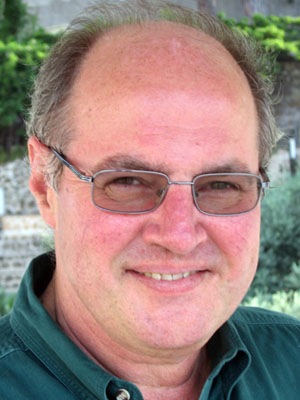
Fr. Michael Kelly SJFr. Michael Kelly SJ
Fr. Michael Kelly is an Australian Jesuit working in Asia. After having worked with radio, television and internet in various Asian countries and in Australia, for the past two years he has been the executive director of UCANews, a Catholic News Agency with offices in Bangkok and Hong Kong.
The agency developed also several specific products focused e.g. on the Catholic Youth Movement in India, the Jesuits in the Philippines or the religious in India. In the last few months they launched an interactive medium Cathnews Asia. Michael Kelly is also involved in the training of young journalists, using the newest audio-visual web techniques to express their voice, the voice of the church in Asia and the mission of the Gospel in the diversity of the Asian context.
Posted: September 2 | Listen now:
From the 4th to the 9th of September Father General Nicolás visited Croatia and Hungary to celebrate the 100th anniversary of the birth of these two Provinces.
In Croatia he visited Zagreb where he participated in a number of meetings and gatherings. The visit to Hungary was centered in Budapest and Miskolc.
Posted by Ryan Duns, SJ
On Saturday night, I went to Holy Name Church with Father Karl Kaiser, SJ, the president of U of D Jesuit. I wasn’t surprised that attendance seemed sparse: it is, after all, Labor Day weekend and I suspect that many people had taken advantage of the beautiful weather and holiday to do some traveling. Besides, there were several college football games that afternoon, so I suspect that the usual crowd ended up finding a different Mass to attend.
It was, however, kind of exciting to see two of my own students amid the congregation. It was even nicer that each one approached me with his family after Mass to say hello. One of my students, in my sophomore New Testament class, asked me with a wry smile whether I realized that the passage of scripture I had assigned as the basis of the weekend’s writing assignment was the same passage that had been proclaimed that day.
The assignment is what I’ve called “Sermon from Your Seat.” The students are asked to write a 1-page, typed, double-spaced reflection on a passage from Scripture…which, it turns out, is the Sunday Gospel reading from the liturgical cycle! Their prompt is to write a mini-homily, or sermon, addressing an audience of their peers: what, in essence, does another sophomore need to hear from this piece of scripture?
The point is twofold. In a course on the New Testament, I’d be remiss if I didn’t encourage them to read the Bible (prayer each day, I might add, is taken from the Gospel of Mark which we are slowly working our way through). Second, I know that kids are easily bored at Mass. I figure, therefore, that if they’ve already prayed over and thought through the Gospel reading that listening to the homily will be more engaging. Think about it: students will come to Mass already having an idea about what the Word of God means and, as they listen to the homily, will (hopefully) be engaged listeners trying to see how closely their reflection matches the one given that day.
By helping students to raise even the simplest question, “Will Father/the Reverend preach on the same thing that I did,” I hope to facilitate a more engaged listening to the Gospel each Sunday. Ideally, the student will wrestle with the homily as he hears it, trying to see how his insights and the priests resonate with one another. Better still would it be for the student to engage his parents afterwards, saying how close he and the priest were that day or, perhaps, why the preacher was dead wrong in his interpretation….a potentially sophomoric sentiment appropriate for sophomores!
Anyway, I was thrilled that at least ONE student out of nearly SIXTY seems to have gotten the point of the assignment. Heck, I’ll be happy if 30 of them realize that the passage they were assigned is the one that was read at Mass. But I figure that if I can help to encourage an encounter with the Word of God, prompting the students to think deeply on how the Word enters into and affects their lives, I will be making my own contribution to the formation of Men for Others.
Posted by Ryan Duns, SJ
One of the three courses that I am teaching this year is a senior-level “Introduction to Philosophy.” We began the semester by reading a short essay by philosopher/theologian/mystic Simone Weil entitled “Reflections on the Right Use of School Studies with a View to the Love of God.” This was followed by several days discussing the concept of Justice, using Book I of Plato’s Republic (the dialogue between Thrasymachus and Socrates) as our point of departure. This last week, we spent four days reading and discussing Plato’s Euthyphro in class.
Reading the Euthyphro has spurred me to read several other Platonic dialogues. The one I’m currently reading, the Phaedo, provides a fascinating treatment on the nature of the soul and the afterlife.
In a week marked with rancorous debate concerning President Obama’s address to students and the furor surrounding his speech on healthcare, two points raised in the Phaedo seem worthy of mention.
In the heat of the debate surrounding the nature of the soul, a serious blow is believed to have been dealt to Socrates’ position. Those who witnessed the exchange where Cebes appears to demolish Socrates’ argument are left with “an unpleasant feeling at hearing” what was said. Socrates, however, did not take to the streets (he was, at this point, in prison) nor did he launch a smear campaign against his opponent. Listen, then, to how own observer describes Socrates’ response:
Often…as I have admired Socrates, I never admired him more than at that moment. That he should be able to answer was nothing, but what astonished me was, first, the gentle and pleasant and approving manner in which he regarded the words of the young men, and then his quick sense of the wound which had been inflicted by the argument, and his ready application of the healing art. He might be compared to a general rallying his defeated and broken army, urging them to follow him and return to the field of argument.
Socrates does not lambast his questioners, nor does he shrilly decry them for questioning his argument. He regards them with patient kindness and, fully aware of the seriousness of their counter-argument, he re-enters the discussion.
Compare this with the manner in which discussions are being held today. It seems rather commonplace to employ label-and-dismiss tactics against opponents. Senator Kennedy has been labeled an “abortionist” who should have been denied a Catholic funeral; President Bush has been called a “traitor” and should face war crimes. No effort, it seems, is made to re-engage in civil discourse, no attempt is made to “return to the field of argument” as disagreeing parties seek together the truth of the matter.
Second, I was captivated by the following lines of the dialogue:
Let us take care that we avoid a danger…The danger of becoming misologists…which is one of the very worst things that can happen to us. For as there are misanthropists or haters of men, there are also misologists or haters of ideas, and both spring from the same cause, which is ignorance of the world.
And a little later on:
For the partisan, when he is engaged in a dispute, cares nothing about the rights of the question, but is anxious only to convince his hearers of his assertion.
I can only imagine that Socrates would have nodded his head knowingly, then, in response to this week’s outburst by Congressman Joe Wilson (R-SC) who shouted out “You Lie!” in the midst of the President’s speech.
I’m not interested in debating healthcare reform or its subtleties and nuances. Indeed, it matters little to me whether Wilson is a Republican or Democrat. What I am interested in is that this elected official appears to have neither the courtesy nor restraint that should be expected of those who are engaged in crafting and forming policies that will affect an entire country. In our classrooms we try to teach our students to listen carefully and disagree respectfully after analyzing and thinking-through an opponent’s position. If we were to follow Mr. Wilson, however, there’d be little need for any such painstaking work: students could simply write “Shakespeare’s Wrong!” or “Pope Leo XIII Lies!” or “Lincoln is Dumb!” on their papers and expect to have an audience.
Not enough people read this blog for me to worry that my insinuating that Representative Wilson is a misologist will cause a stink. To be fair, I think both sides of partisan politics are misologists who are interested only in scoring points with their constituencies rather than trying to work together to help people.
Plato wanted to kick the poets out of the Republic, for he feared that their verses would provide poor models for the people to imitate. What then would Plato do today, when it is our leadership who is setting such poor examples for the people to follow?
 MP3 file