

Author: cfliao
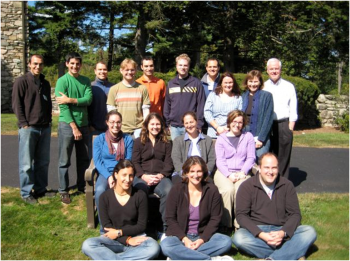
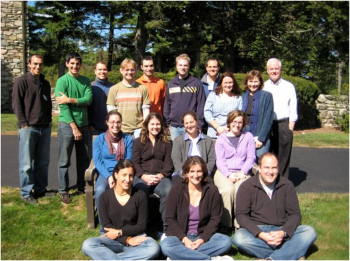 CLIA Boston’s inaugural group (2009-2011) and program leaders at their kick-off retreat
Participants in the Contemplative Leaders in Action Program in Boston began their first year with a retreat at the Connors Family Retreat and Conference Center in Dover, MA, on the weekend of September 26-27. Retreat highlights included Rob Keder’s “groovilicious” icebreaker, Friday night sharing of career highs and lows, three thought-provoking talks by Fr. Michael Boughton, S.J., each of which was followed by a quiet time of prayer and reflection, a session facilitated by Fr. Edward Quinnan, S.J. focusing on the graces received on retreat, the closing liturgy which Fr. Quinnan celebrated, deepening of connections among all who attended, and the spectacular fall weather which allowed retreatants to pray and reflect while contemplating the beauty of God’s creation.
Thousands of pilgrims from all over the world have been in Rome this week, celebrating the life and achievements of Mary Ward and calling for her beatification. After a failed attempt to become an enclosed nun, Mary worked in the underground Catholic networks in London at the beginning of the 17th century, and felt that God was calling her to religious life without enclosure. She founded her Congregation in 1609, based on the Constitutions of the Society of Jesus, with its members modelling themselves on the mobility and missionary focus of the Jesuits.
The week-long celebration began in the Piazza del Popolo where an international group in 17th-century costume re-enacted Mary Ward’s entry into Rome after one of her heroic journeys on foot across the Alps. They greeted a group of sisters who had been making stages of the actual journey in pilgrimage over the past three years. More than 1,000 sisters of the Congregation of Jesus and Institute of the Blessed Virgin Mary (Loreto) from every continent in the world, plus colleagues, students, staff and friends have been visible around Rome in brilliant yellow scarves, praying and marking the 400th anniversary of her pioneering vision for women.
Events included an international symposium addressed by Dr Gemma Simmonds CJ, who lectures in Systematic Theology and Spirituality at Heythrop College, University of London, Australian-born canon lawyer, Dr Mary Wright, formerly general superior of the IBVM, now working in Rome in the Congregation for Institutes of Consecrated Life, and Professor Martha Zechmeister CJ of the University of Central America in San Salvador.
Liturgies around Rome included processions with international flags, dance by sisters from India and music sung by the choir of St Mary’s School Shaftesbury, which also sang at the papal audience and in St Peter’s Basilica. During a reception at the British embassy to the Holy See, ambassador Francis Campbell took the opportunity to thank the sisters present for their contribution to the many sectors of British society in which they have worked and served since the founding of the Bar Convent, York, in 1686.
On Wednesday, the Mary Ward pilgrims gathered in St Peter’s Square and called for her rapid canonization. ‘Pope Benedict himself is a past Mary Ward pupil from our schools in Germany’, says Sister Gemma Simmonds, ‘and is a great admirer of hers. She gave so much to the Church and to society, not only for her own day but for ours. The time for her amazing achievements to be recognized is long overdue, so if the Pope is coming to England next year to beatify Cardinal Newman it would be a most opportune moment for there to be two English beatifications instead of one. This has been a brilliant opportunity for us to see how Mary Ward’s influence extends across the world. I hope it will prove to be a good rehearsal for the next great celebration’.
Communication and Public Relations: is the name of the new office which will oversee all communication activities of the Curia. The new office has three branches: 1) Press and Information: (Father Giuseppe Bellucci in charge) includes the biweekly Electronic Bulletin as well as relations with journalists 2) Internet: (Father Philip Debruyne in charge) includes websites, RSS, pod casts, video, etc., Father Debruyne will work in Rome one week a month. 3) Publications: Yearbook of the Society, News and Features, Acta Romana Societatis Jesu and other Curia publications. Oversight for these resides with the Communication Committee. Father Giuseppe Bellucci will have overall responsibility for this new office and will be assisted by a small group of Curial Jesuits (five or less) as well as a team of Jesuit and Lay experts, who will meet regularly with the Curia Communication Committee. The committee’s role is to evaluate current performance levels, present recommendations, provide feedback and encourage a high level of professional expertise. Some of those on the committee will reside in the Curia so as to ensure a rapid response to inquiries; others will live in Italy or beyond, attend one or two meetings a year in the Curia and participate in other meetings via Internet or phone linkups. This new configuration of the information sector is part of the renovation of the General Curia requested of Father General by the 35th General Congregation; it will take effect “step by step”. New arrivals. In addition to the appointments noted in the previous Electronic Bulletin, there are two more to mention: – Father Marc Lindeijer, of the Netherlands Province, will be the assistant Postulator. Father Lindeijer is 43 years old and was recently awarded a degree in Church History. – Father Philip Debruyne, of the Province of North Belgium, will be the new webmaster in the Communication and Public Relations Office. Father Debruyne, 60 years old, remains the editor of Jesuits in Europe and webmaster in the Conference of European Provincials Office in Brussels.
What is MAGiS? . . . More for Your Life. More for Our World.
Magis is latin for “more”
St Ignatius of Loyola used the word magis to talk about a quest for the greater good, always striving for the greater glory of God – prompting us to search, strive, love, live and struggle more..jpg)
Today, we use the term magis to mean seeking more of what God wants for us.
Ignatius was a Spanish soldier from the 16th century whose experiences of spiritual conversion founded what we now call “Ignatian spirituality”. His way of looking at the world through the eyes of Jesus helps us make decisions about our lives and our place in the world.
We are each at a different place in our search for, or journey with, God. MAGiS offers a stepping stone along the way and companions for the journey.
The MAGiS program aims to walk with young adults discovering their identity in their work, at home, and in relationship with others. It aims to help ascertain, through life experiences, what leads us to freedom, our true self and a deeper relationship with God.
MAGiS is about unearthing and living your heart’s deepest desire and God’s dream for us that leads to the greater good.
MAGiS Programs
MAGiS programs take place in many countries. The Australian MAGiS community is being developed under the headings of Spirituality, Companionship and Service.
MAGiS here is an initiative of the Loreto Sisters (IBVM), the Faithful Companions of Jesus (FCJ), the Sacre Coeur Sisters (RSCJ), the Sisters of Charity (RSC), and the Jesuits (SJ) to connect with young adults from around the world who are looking for more in their lives from a faith that does justice.
MAGiS08 is the MAGiS program at World Youth Day in July 2008 that builds on previous Ignatian programs at WYDs in Paris, Rome, Toronto and Cologne.
This program offers a series of gatherings focused on making the World Youth Day experience more personal and yet more for others.
MAGiS08 will help young people from around the world reflect on their experience here. It will allow them to meet poor and marginalized people. We hope that as they read their own hearts and see the world in a new way, they will deepen their relationship with God. This was the way of Ignatius of Loyola.
We invite you to explore the possibilities that Ignatian spirituality offers. We hope that you will deepen your faith and commitment to justice. We hope that you will share your talents with young people from many cultures. Read more about the MAGiS programs here.
Download MAGiS08 brochure (PDF 566k) here
Download MAGiS08 presentation (PDF 2.8MB) here
In mid-May, Fr. Pablo and I headed out for a 4-week long journey to China. For more than a year we had been searching for an opportunity to lend our services to people with AIDS. We had rejected an earlier proposal by a local official to assist in a project when we discovered that he was only interested in the financial aspect but not the actual service of the people.
At our third stop, we visited an AIDS organization run by a man named Edward. What we found was something beyond our expectations. Edward gave us an overview of his organization’s operation which provides shelter for AIDS patients and advises their families. One of his best practices is to hire HIV carriers to work for him by providing counselling services inside the hospital. We exchanged experiences with Edward, briefing him on our leper projects, outreach programmes, scholarship programmes, and the AIDS work. Edward lamented that his organization has so many needs. After a few discussions, we began to think about the possibility of collaboration.
In the afternoon, we visited one of his shelters for AIDS patients. Edward told us that on one occasion a hospital brought an orphan over to them because no one wanted to adopt him, not even his grandparents. His centre serves only adult AIDS patients and they are not set up to care for children. But Edward didn’t have the heart to send the orphan away because he had no place to go. So the child stayed. Then one thing led to another and within two short months they had five HIV-positive children. This has made the living conditions much worse and now they are very crowded. Edward is in desperate need for funds because he has no budget to relocate the children.
We spoke to Edward about our HIV orphanage plan. After listening to us Edward said, “Do you think you can give us a Sister to care for the children?” At that moment my heart started singing although my ears could hardly believe what I was hearing. “What?!” I said. He repeated that they needed a good caretaker for the children. I responded with joy that we would be happy to send him not just one Sister but two! When we least expect it He opens the door for us!
A month later, I had located five congregations and talked with each local superior to brief them on the HIV orphan project and our need for the Sisters. Surprisingly, they all expressed a desire to work with us, and asked what qualifications the Sisters would need to have. Afterwards I drafted the following response and sent it to them.
We are not asking that the Sister should have knowledge of AIDS care,
But we would like her to have patience and compassion;
We do not require her to have medical expertise,
But we would like her to be responsible;
Neither do we demand administrative talents,
But we would like her to be able to live her faith with joy.
During the period of service, the Sisters will learn from the children and we will provide a training opportunity. We believe the technical skills can be learned but the motivation to serve has to be there from the beginning. If He can plant a seed to nurture, it will grow and bloom. We believe we can provide parental love to the children and help them reclaim lost affection, and regain their confidence, their sense of virtue and the desire to study. We wish to have the honour of working with you! AMDG
Your servant,
Imp
Since then, the music has not stopped, and I cannot stop singing! As of now, we are setting up our fourth HIV orphanage.
BRISBANE, Australia (UCAN) – The recent tsunami, typhoons and floods devastating the Asia-Pacific region rekindled my memories of Boxing Day 2004 back home in Sri Lanka.
My mixed memories could be framed in Dickensian imagery of the “worst of times” leading through a “winter of despair” to a “spring of hope.” The one-day disaster’s unprecedented wave of deaths and destruction evoked the best of the human spirit, though occasionally dented by traits of Cain.
Boxing Day 2004 “was the day that changed my life,” says Donny Paterson, an Australian who volunteered to work in tsunami-hit Sri Lanka. “No Ordinary Bloke,” a book published here recently, claims the author “rescued a village … and saved himself.” Even as of now, many such volunteers, locals and guests, discover themselves in the service of disaster-hit Cambodia, India, Indonesia, Japan, Laos, the Philippines, Samoa, Taiwan, Thailand or Vietnam. Indonesia alone attracted volunteers from 20 countries.
Adversity brings strange graces. And humanitarian outreach by individuals and groups echoes the service commitment of great souls like Francis of Assisi, Peter Damien of Molokai or Mother Teresa of Kolkata. As evident in the lives of sainted pioneers, volunteers carry forward their ministry of human fellowship.
Additionally, modern means of communication are a blessing to volunteerism. As anticipated by Jesuit scientist Father Teilhard de Chardin, the computer, the Internet, the worldwide web and blogging boost instant networking. These channels of intercommunication convey news of disasters, ascertain needs, pool human energies, assemble resources, rout aid and can even monitor use and abuse of opportunities.
The melding of artificial intelligence and human wisdom has the potential to do more. Such enlightened humanitarian interaction has a spiritual dimension. Call such spiritual exchange “holiness in action” or what-you-will, the proof of its authenticity lies beyond emergency relief, long-term rehabilitation or counseling. In the language of Father Chardin, the resulting interconnectivity is “an evolutionary pathway” that upspirits donors and donees as a globalizing community.
When gifting me a copy of his 1971 book “Evolution and Revolution,” Martin Wickramesinghe, the doyen of Sri Lankan writers, showed me the book’s special chapter on Father Chardin. It focused on the Jesuit scientist’s theory of noogenesis when “man will transcend himself”. It also quoted what the Jesuit’s book “Divine Milieu” had to say about a mystical transformation with “the whole group of mankind forming a single body and a single soul in charity.”
Charity is also intrinsically linked with justice and the common good, as noted in Pope Benedict XVI’s recent encyclical, “Charity in Truth.” Hence ensoulment as a sharing community is bound with the duty to search for holistic solutions for disasters. And the noogenesis advanced by the “nervous system” of modern media equips humanity with insights to intuit that disasters are less an act of God than an outcome of our failed mandate to bring Creation to fruition.
Unbalanced advancement of knowledge has soared heavenward in many ways at the cost of the biblical mandate to “subdue the Earth” even in its very literal sense. Space travel and nuclear shields have continued to obsess scientists and politicians amid persistent abuse of the Earth and its blessings. When will disasters awaken thinking humanity to the responsibility of stewardship in justice?
Instead of merely blaming the Earth’s tectonic plates, the human community must foster a new fellowship to push research through follow-up action to prevent disasters. Agencies like Caritas need to outsoar charity in a rainbow of justice.
Offers Viewing of Ancient and New Instruments
By Carmen Elena Villa
VATICAN CITY, OCT. 13, 2009 (Zenit.org).- The Astrum 2009 exhibition, opening Friday in the Vatican Museums, will showcase astronomical instruments over four centuries old next to the most modern counterparts.
Archbishop Gianfranco Ravasi, president of the Pontifical Council for Culture, headed the group that presented this exhibition at a press conference in the Holy See today.
The exhibition will open Oct. 16 and will run through Jan. 16, coinciding with the close of the International Year of Astronomy, promoted by the International Astronomical Union and UNESCO.
The display is being organized by the Vatican Observatory, Italy’s National Institute of Astrophysics and the Vatican Museums.
During the press conference, Ileana Chinnici, an organizer of the exhibition, said that “it is unique in its kind,” because for some treasures are being presented for the first time.
She explained that the display will include some 130 objects, including instruments, maps, manuscripts of Galileo Galilei, models of the Ptolemaic and Copernican systems, paintings, photographs, codes and books.
Chinnici reported that only two exhibitions of this type have been held previously: one in 1929 and another in 1958.
Historical colleagues
Another organizer, Tommaso Maccacaro, president of the national institute, said that these instruments “have been effectively used” by our colleagues in the past “to observe the heavenly bodies, measure properties, acquire data and verify hypotheses.”
He added that for the astronomers of history, these were similar to “the gigantic telescopes and complex instrumentation that we build and install today in the most remote sites of the planet — and also in orbits around the earth.”
Chinnici explained that this exhibition was initiated in order to “give visibility to this patrimony, enriched with books, archive letters and pieces from other valuable collections.”
The director of the Vatican Observatory, Jesuit Father José Gabriel Funes, said that “all of us astronomers are children of Italian astronomy.”
He shared with the public his opinion on the most valuable object in the exhibition: a 16th century astrolabe — an instrument used to determine the altitude and position of the stars in the heavens.
“This piece was given to Pope Leo XII for his priestly jubilee,” the priest said. “The re-foundation of the Vatican Observatory in 1891 is very united to this specimen.”
Chinnici affirmed that Astrum 2009 hopes to make the public aware “of the richness of the value of Italian astronomic tradition, so that the public will approach astronomy of today and of the past not as the privilege of a few but as the patrimony of all.”
The Vatican Observatory is one of the oldest astronomic institutions of the world. At present it is engaged in scientific research and education directed especially at young astronomers of developing countries.
Textes chrétiens chinois de la Bibliothèque nationale de France
This collection of 26 volumes contains a selection of hitherto unpublished texts from the Chinois-section in the National Library of France.
In selecting the texts from the National Library of France, the editors adopted the following criteria. A first criterion was to reproduce original texts published or written before ca. 1820. A second criterion was to include only texts that have not been reproduced or reprinted in any modern collection. A third criterion was to concentrate, as much as possible, on unique or rare texts not to be found in other libraries or archives.
The present publication reproduces some 190 texts, which have been arranged by subject. They reflect the characteristics of Chinese publications on Western science and religion in the seventeenth and eighteenth centuries and at the same time testify to the richness of the Chinese collection at the National Library of France. These publications cover a wide range of subjects such as Renaissance science; Aristotelian philosophy; humanistic writings; geography and astronomy. There are also biographies of missionaries and converts; apologetic writings, and memorials and edicts. At least seven volumes give particular attention to the writings of Chinese converts. They include a unique collection of collection of sermons for every day of the ecclesiastical year 1690-1691 (Kangxi 28/29). The National Library of France is also rich in theological writings and spiritual treatises, as well as liturgical books and prayer books; treatises on sacraments and rules for associations. It also has a good collection of books on figurism, to which an entire volume is devoted.
This is already the third collection of primary sources published by two of the present editors. The preceding two collections are still for sale:
耶穌會羅馬檔案館明清天主教文獻 Chinese Christian Texts from the Roman Archives of the Society of Jesus, Taibei: Ricci Institute, 2002, 12 vols., in total 6786 pp., 100 primary sources. ISBN 957-9390-16-9.
徐家匯藏書樓明清天主教文獻 Chinese Christian Texts from the Zikawei Library, Taibei: Fu Jen Catholic Univ. Press, 1996, 5 vols., in total 2621 pp., 37 primary sources. ISBN 957-98886-0-4.
KOLKATA, India UCAN) – A Jesuit center’s campaign against human trafficking in eastern India has been buoyed by its first success.
Father Probal Gomes says a 30-year-old woman has been rescued from a human traffickers’ racket in the region. But the woman “is still in shock and guilt, and it will take a few months for us to bring her back to her normal self.”
The Jesuit priest directs Udayani (awakening) Social Action Forum (USAF). It launched an anti-human trafficking and safe migration program in June in West Bengal state’s 24 Parganas (South) district after getting progressively more involved in the issue of trafficking in the region for three years.
The forum works with the Association for Bengal Collaborators for Development (ABCD), which coordinates Catholic diocesan social services in the state.
Father Gomes said Church NGOs do not take on the traffickers directly but work through women’s self-help groups, village youths and others.
“If we do not create awareness among the people of this district, many would be lost forever, not only to the sex trade but also through cheap labor rackets.”
ABCD director Father Ignatius Philo Sarto describes West Bengal as one of the most disaster-prone states in India. “Human trafficking has been one of the most common problems in the area for the past 20-30 years,” he said, adding that his association wants to tackle the problem with help from other Christian groups.
According to data from the National Crime Records Bureau, West Bengal accounted for 61 of the 149 cases of trafficking in women registered at the national level in 2005. But local media say the official data are only the tip of an iceberg.
Father Gomes said USAF plans a comprehensive survey to gauge the true scale of the problem in the district, but it “may take about six months before we get the results.”
Meanwhile, the Jesuit center has launched awareness campaigns in Christian schools on the issue of human trafficking.
“Even children in the 9-14 age group are fully aware of what is happening in their locality,” the priest said.
USAF field officer Sorodindu Biswas played a key role in the group’s first rescue. He said a police officer had offered the woman a check for 25,000 rupees (US$525) if she volunteered to work outside the state.
She was saved “in the nick of time” only because she had no bank account or means to cash the check, Biswas told UCA News. “That is how we came to know about the human trafficking racket,” in which a senior police official also was involved, he said.
After being rescued, the woman told USAF staff she has an 11-year-old son and was desperately looking for funds to pay back money her husband had borrowed to set up a snack shop in their village.
Biswas explained that gangs generally look for women in the 15-30 age group, especially those with family and financial problems, and send most of the women the lure away to Persian Gulf countries.
He added that the Jesuit center had sought the help of the local village body to save the woman. The incident has given USAF “some leverage to take up similar cases in future,” he said.
As a further measure to prevent trafficking, the Jesuit center has set up local “vigilance committees” in the four areas where it operates.
Each committee comprises self-help group leaders, youth club members, school headmasters and heads of local government bodies.
Father Sarto says they have also organized youths who watch for signs among peers that might indicate they are getting involved with or are vulnerable to traffickers. One behavior that Church NGOs have advised people to watch for is excessive time spent using mobile phones, which can mean someone is working for the racket.
“Our efforts are fruitful when we get support and help from political and police forces,” the priest said.
SHANGHAI: Matteo Ricci and his time
Among the celebrations for the fourth centenary of the death of Matteo Ricci, the Shanghai Department of the Italian Cultural Institute, together with Chinese partners, organized a series of activities to commemorate the Italian missionary. Among them, a study day on the theme “Encounter between Western and Chinese”, which took place on September 11th. Mr. Paolo Sabbatini, Director of Italian Culture Institute of Shanghai, summarized the life and the deeds of Matteo Ricci, and offered a preview of the program of exhibitions of great masterpieces from the Renaissance art masters, planned for 2010.