
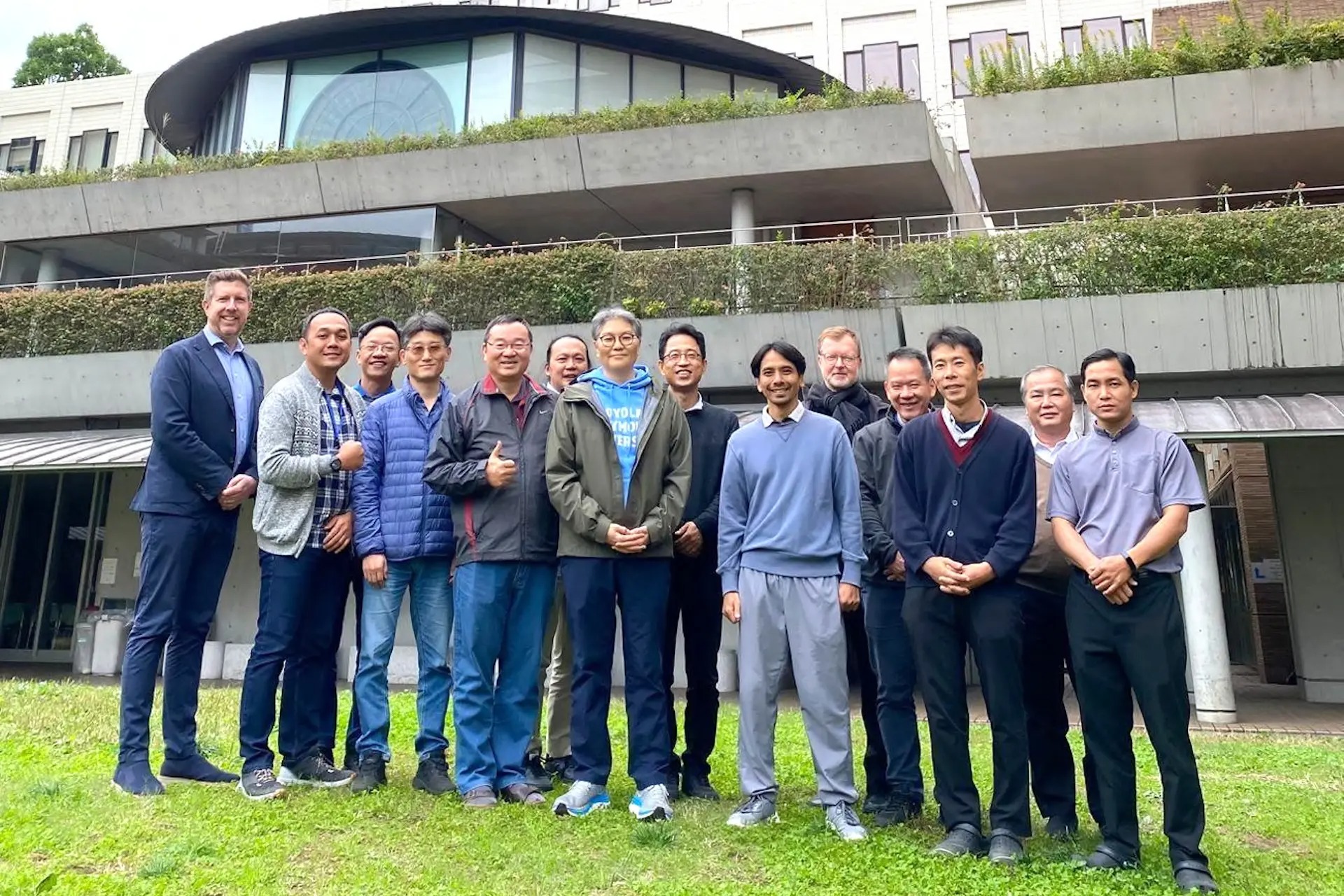
The Jesuit Conference of Asia Pacific (JCAP) delegates for Safety in Ministry met at Kibe Hall, Yotsuya, Tokyo during the first week of November. It was a privileged moment to gather in the land of the “Rising Sun,” where St Francis Xavier arrived in 1549.
Safeguarding may be an unattractive idea. It has complex meanings and often evokes discomfort, as it is closely associated with the reality of abuse. The term is usually understood as guarding or following “rules” that everyone is expected to observe and be accountable for. As prescribed norms, these rules have implications and disciplinary consequences that are frequently perceived negatively. Worse still, the past decades have uncovered horrific scandals of sexual abuse of minors in the Church worldwide. As a result, many view safeguarding primarily as a strict framework for intervention and prevention.
The Society of Jesus has responded through the Promotion of a Consistent Culture of Protection (PCCP), one of the mandates that came out of General Congregation (GC) 36. Likewise, the Church has introduced new regulations, such as Vos Estis Lux Mundi (VELM) 2.0 and the updated Book VI of the Code of Canon Law. In the next few years, the Pontifical Commission for Protection of Minors (Tutela Minorum) will publish the Worldwide Annual Report on Safeguarding. The second annual report, released in 2025 and covering the year 2024, focused on the theme of Justice and Conversion, particularly reparation for victims and survivors.
The word “safeguarding” itself consists of two different words: “safe” and “guard”, which together convey a complex meaning. Given the linguistic and cultural diversity of our Asia Pacific Conference, one possible translation offered was “Life Guard”. Other suggested translations included “culture of protection” or “safety in ministry”, emphasising safety within our works and apostolates, including community life.
Safety, in fact, is a basic human need and lies at the foundation of who we are as human persons. In this sense, safety is paramount to humanity. It is a universal value expressed differently across cultures. We are called to respect and understand this value in different cultural contexts and in the light of Gospel values.
In certain contexts, safeguarding takes on additional layers of meaning. For example, in present-day Myanmar, it encompasses not only protection from abuse but also the safety of life and security amid political and armed conflict. Seen in this light, safeguarding carries a positive meaning, similar to other fundamental human values such as love, care, responsibility, maturity, and security. The Catholic Safeguarding Institute (CSI) in the Philippines further articulates this vision through a tripod model of relational safety—safe self, safe community, and safe ministry—which guides training and formation in this field.
In this annual meeting, each JCAP delegate presented updates on the implementation of the PCCP audit. We also shared our experiences and listened to one another’s consolations and challenges in this mission through spiritual conversations. A few of us observed that the PCCP implementation, covering policy, case management, and training, has often been driven by donor requirements tied to project funding, such as support from FASCI and other organisations. Others shared about ongoing training and formation in their respective provinces or regions. We acknowledged the importance of fostering more positive mindsets and attitudes towards safeguarding, as well as the need for ongoing formation, accompaniment, and self-care in our life-mission. Participants also highlighted that communicating safeguarding across diverse cultures should avoid a top-down approach and instead grow from the ground up, recognising safeguarding as integral to who we are and what we do. All of us agreed that we are all responsible for this mission, and we have to promote this culture of safeguarding together.
We concluded with a shared hope in creating, promoting, and sustaining safe spaces and relationships grounded in respect and human dignity. It is within this horizon that a true culture of protection (Safety in Ministry) can flourish in our life-mission and cultural contexts.
By Agustinus Tanudjaja SJ