
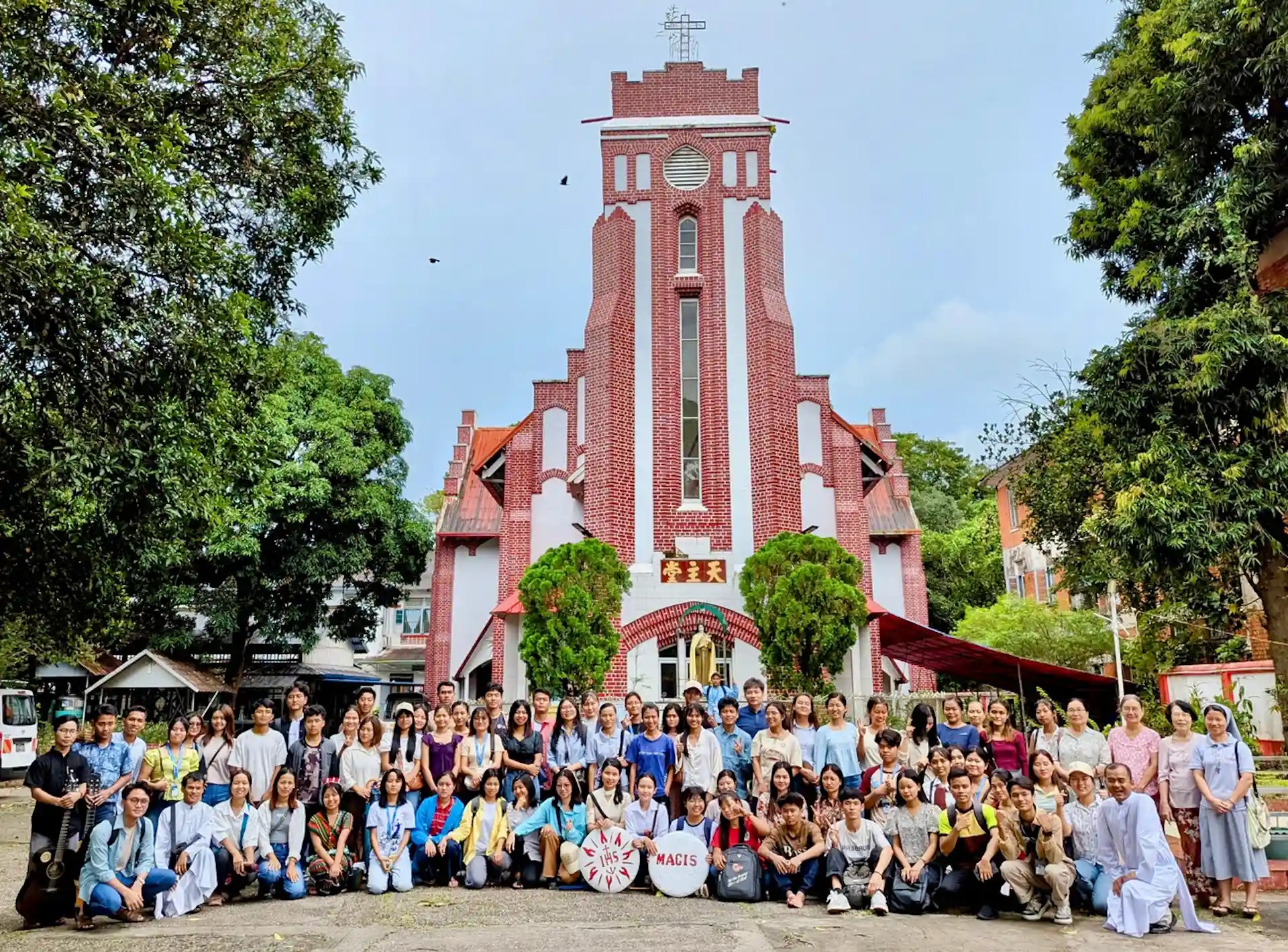
On the eve of the International Day of Peace on 21 September, 77 Magis youth, Jesuits, and religious sisters set out on a Magis Pilgrimage for Peace to seven churches in Yangon. Their footsteps, prayers, and silence testified to the yearning for reconciliation and healing in a wounded land.
Each sacred stop followed the dynamics of the Spiritual Exercises of St Ignatius: stillness before God, listening to His Word, prayer, reflection, and sharing. A youth, a nun, or a Jesuit scholastic gave a short reflection on the patron saint of the church, reminding the pilgrims that holiness is possible at any age and in any circumstance. In groups, they shared their consolations and challenges, and together they prayed a decade of the Rosary for each of the seven states and divisions of Myanmar. Their intercession wove the nation’s brokenness into a fabric of hope.
The pilgrimage reached its zenith at St Mary’s Cathedral in Yangon. There, in communion with the Catholic Church celebrating the Jubilee Year of Pilgrims of Hope, the youth entered through the Jubilee Door—a powerful symbol of Christ Himself, the Door of life and reconciliation: “I am the gate; whoever enters through me will be saved” (John 10:9).
From the cathedral, the pilgrims moved to the hall of the Good Shepherd Sisters, where they celebrated the Eucharist, the sacrament of unity and love. The day ended with a Magis Circle, where the pilgrims, as one family, shared how the Spirit had stirred their hearts along the journey.
The young voices testified to the fire that God had kindled in them: “The active participation of so many youth gives me hope that peace is still possible,” said Anthony Mung.
Mary Seng Pan reflected, “Visiting the seven churches gave me a deep peace within. I believe this peace will ripple outward to the seven states and divisions we prayed for.”
Augustine Kyaw Myo Naing declared, “The presence of youth from different states and divisions shows the reality of unity among the Magis youth.”
Naw Cecilia marvelled, “Never before had I visited seven churches in a single day. Listening to the lives of the saints in each one truly inspired me.”
In their own words, the Magis pilgrims experienced what St Ignatius invites us to in the Exercises: to “seek and find God in all things”—in prayer, in one another, and in the very streets of Yangon. Their steps became sacraments of hope, their prayers acts of resistance against despair, their silence a cry for peace.
This Magis pilgrimage was an encounter with the God of peace who continues to accompany His people. As Pope Francis reminds us, “Peace is a gift of God, but it requires our efforts. Let us be artisans of peace” (Message for the 50th World Day of Peace).
At the end of the pilgrimage, the youth did not merely return home; they were sent forth. Like the first companions of Ignatius, they were commissioned to go out into the world as companions of Christ, to bear light where there is darkness, to sow hope where there is despair, and to labour for a new dawn of justice, reconciliation, and peace, for the Greater Glory of God, Ad Maiorem Dei Gloriam.
Watch highlights of the Magis Pilgrimage for Peace: